
Reviewed · MOOREA
Moorea: Aquablue Helmet Underwater Walking Experience
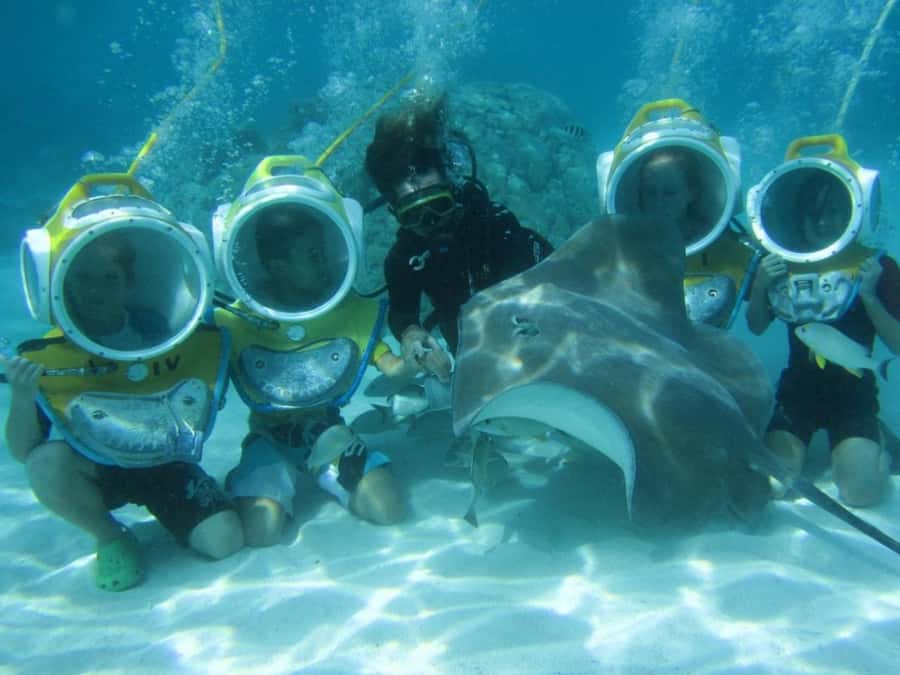
The star of this Moorea outing is the helmet walk at 12 feet underwater, where you can stand and stroll while fish pass by and stingrays gather nearby. You breathe through an air hose linked to the boat, so there is no scuba tank on your back and no certification to arrange.
I like two things right away: the activity is friendly to first-timers, and the small group limit of eight keeps the instruction personal. I also like that the 30-minute underwater session leaves time for a short boat ride and careful preparation instead of rushing you into the water.
The main drawback is that this is not suitable for everyone. Pregnant people and those with heart, lung, back, neck, asthma, or mobility concerns may need medical clearance, and the activity depends on sea and weather conditions.
Key points to know
- Walk at a shallow 12-foot depth: You remain close to the surface, with daylight reaching the fish and coral below.
- Breathe from the boat: The helmet connects to an air supply by hose, avoiding a scuba tank and certification.
- See stingrays up close: The instructor feeds them, creating one of the outing’s most memorable moments.
- Small groups of up to eight: You receive hands-on help with the helmet and underwater procedures.
- Pickup around Moorea: Transport is available from a pier, hotel, pension, Airbnb, or another location along the main road.
- Suitable from age six: You need no prior snorkeling or scuba experience, but you must be comfortable in and around water.
What the Moorea helmet walk is really like
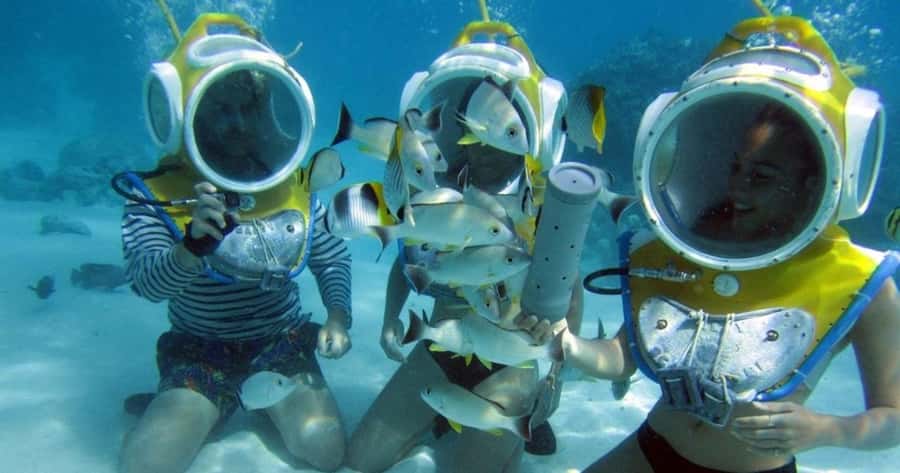
This is a gentle introduction to underwater exploration, not a technical scuba outing. You walk on the lagoon floor in a helmet that covers your head and supplies air from the boat through a hose.
That setup changes the feel of the activity. You do not need to manage a mouthpiece, carry a tank, or learn a set of scuba skills. You simply breathe normally and follow the instructor. The helmet feels heavy before you enter the water, but its weight is reduced once you are below the surface.
The underwater portion lasts about 30 minutes. That is long enough to see a good range of marine life without turning the outing into a tiring half-day commitment. The full activity lasts 150 minutes because transport, changing, instruction, boat travel, and getting in and out of the water all take time.
I would describe the experience as part underwater walk, part guided marine-life visit. You are not just looking down from the surface. You are standing among the fish, with the water around you and the lagoon floor beneath your feet.
A few more things to do in Moorea worth a look
- Sea Scooter Jet Snorkeling “Moorea Dream Adventure”
★ 5.0 · 461 reviews - Sea Scooter Jet snorkeling “Moorea Reef Adventure”
★ 5.0 · 124 reviews - Moorea: Sea Scooter Snorkeling Tour
★ 5.0 · 77 reviews
From pickup to the Intercontinental Moorea Resort
Your outing begins with transport from the pier or your accommodation, or you can make your own way to Aquablue Moorea. Pickup can be arranged from a hotel, pension, Airbnb, or another spot along Moorea’s main road.
The activity is based at the Intercontinental Moorea Resort & Spa. This is where you meet the instructor, receive the initial briefing, and get ready for the water. The location matters because you are not left to figure out the equipment alone. The staff handles the practical setup before you board the boat.
You should arrive wearing your swimsuit, with sunscreen and a towel ready. Reef or water shoes are the right choice. Flip-flops are not accepted for the activity, and water shoes are supplied if you do not have your own.
Bring a cover-up for time on the boat and around the resort. Food and drinks are not included, so plan accordingly. The supplied information does not promise a meal or refreshment stop during the 150 minutes.
A short boat ride to Motu Fareone or Papetoaï
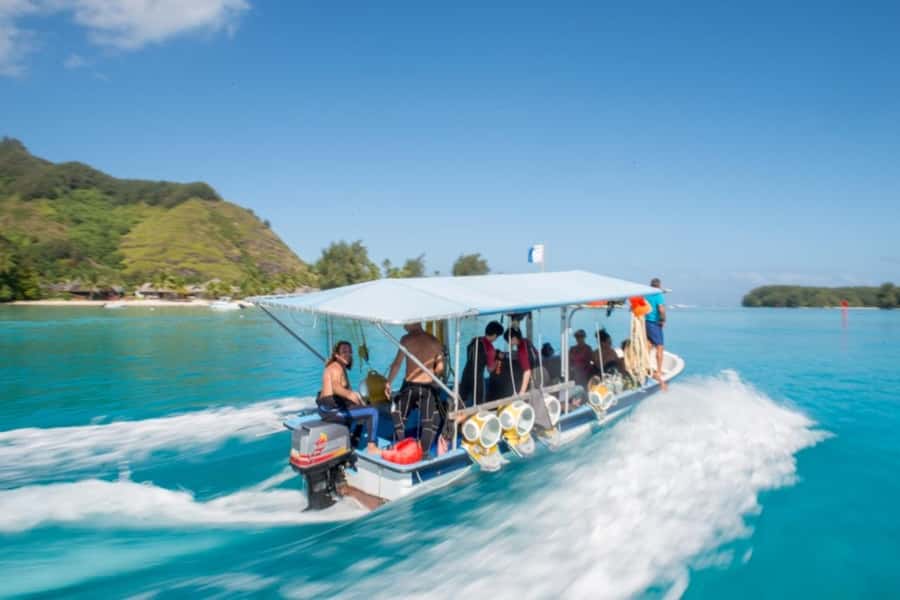
After the briefing and equipment fitting, you board a vessel designed for the helmet walk. The ride to the underwater site takes about 10 minutes, which is short enough to keep the day moving but long enough to get away from the starting point.
The exact location depends on sea and weather conditions. You may anchor off Motu Fareone or in the calm waters of Papetoaï. That flexibility is useful in French Polynesia, where the best site can change with the day’s conditions.
Do not expect a long sightseeing cruise. The boat ride is mainly a transfer to the lagoon site. Its value is that it places you in the marine setting quickly, without using a large portion of your time on transport.
The instructor gives a safety and procedure briefing before you enter the water. Pay close attention here, especially if you have never used a supplied-air helmet. You will learn how the equipment works, how to descend the ladder, and how to move safely once you are below the surface.
Getting used to the helmet underwater
The helmet goes on just before you enter the water and comes off as you exit. You stay connected to the boat’s air supply through a hose during the underwater portion.
This is easier than carrying a scuba tank, but it is still a new sensation. The helmet can feel bulky above the water, and the hose means you need to stay aware of your position relative to the boat and the rest of the group.
The instructor helps you onto the ladder and into the lagoon. Once underwater, the helmet’s weight becomes much less noticeable. You can use your hands normally and walk at a relaxed pace rather than kicking with fins.
You do not need past scuba or snorkeling experience, but you should be comfortable being in and on the water. That distinction is important. This is beginner-friendly, but it is not a dry activity where you can avoid water confidence altogether.
The small group limit, eight people, is a real practical benefit. The instructor can watch the group, help with the equipment, and respond to anyone who needs a moment to settle in. Vincent and his team are specifically named in the experience feedback, and the strongest praise focuses on careful supervision and making people feel at ease.
A different sort of day out:
- Moorea 6-Hour Snorkeling and Lunch Shared Tour
★ 5.0 · 1,758 reviews - Moorea 4WD Tour Inc. Belvedere, Pineapple Farm, Magic Mountain…
★ 5.0 · 967 reviews - Snorkeling excursion, discovery of the lagoon, small group.
★ 5.0 · 861 reviews - Franckyfranck Tours Moorea – Half day Tours
★ 5.0 · 817 reviews
Fish, coral heads, and Moorea’s stingrays
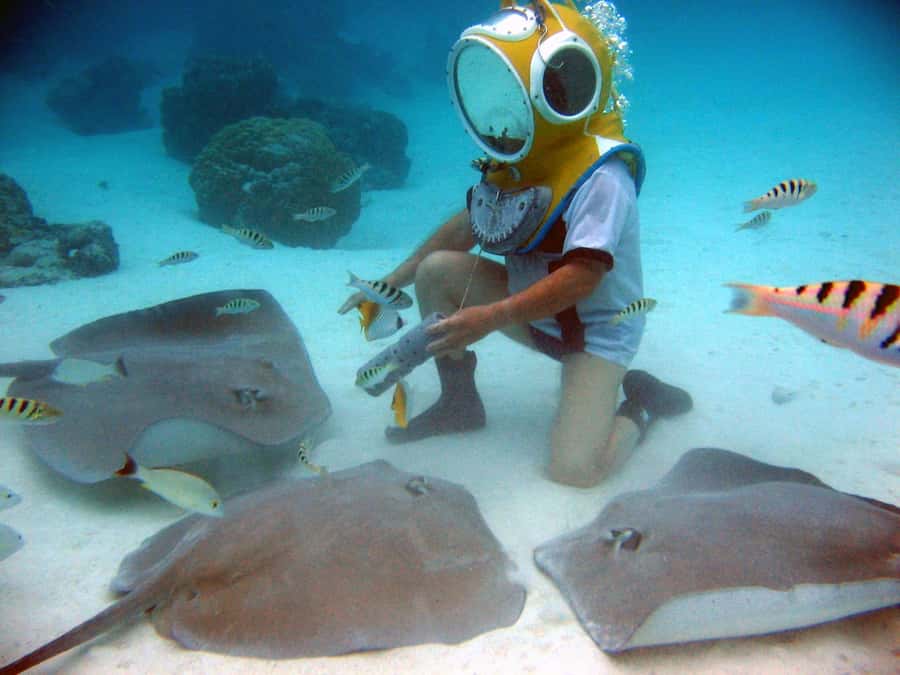
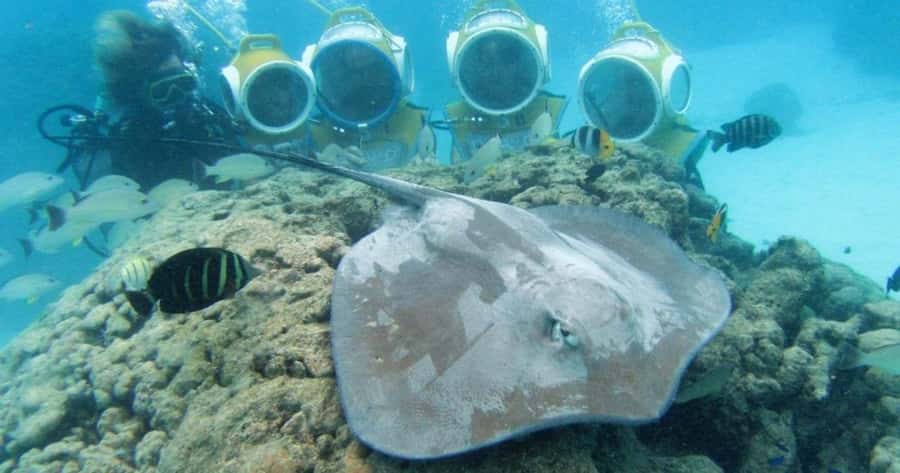
At roughly 12 feet, you are shallow enough to have plenty of natural light. The water above you remains part of the view, while fish move through the space around the coral heads.
The listed species include triggerfish, butterflyfish, groupers, and parrotfish. You may find that the helmet gives you a different angle than snorkeling. Instead of floating above the reef and looking down, you can pause at the bottom and watch fish pass at eye level.
The coral heads provide the setting rather than a promise of one specific reef display. Marine conditions can change, and the anchoring location depends on the day. Still, the activity is built around seeing tropical fish in their natural lagoon environment, not around a staged aquarium visit.
The stingray encounter is the feature that gives this tour extra appeal. The guide feeds the rays, bringing them close to the group. These are described as gentle rays, but you should still follow the instructor’s directions and avoid making sudden movements or trying to handle the animals.
A close encounter with a stingray can be especially memorable for children, but parents should consider the child’s comfort with the helmet, ladder, and open water. The minimum age is six, yet age alone does not tell you how a particular child will respond to the equipment.
Why the supplied-air system matters
The equipment makes this experience appealing to people who want more than surface snorkeling but do not want a scuba course. You breathe continuously from the boat, so you do not have to monitor a tank or learn scuba hand signals and procedures.
That simplicity has limits. You remain connected to the vessel, which means you are not free to swim wherever you like. The route is also shaped by the group, the instructor, the hose, and the selected anchorage.
For many people, those limits are a fair trade. The structure keeps the outing straightforward and helps the instructor supervise everyone. It also lets you focus on the fish and rays instead of on complicated equipment.
I would not choose this as a substitute for a full scuba experience. You do not get the freedom, range, or deeper underwater time of a scuba session. I would choose it if you want a controlled, approachable way to see lagoon life without committing to certification or a lengthy lesson.
Safety, comfort, and physical limits
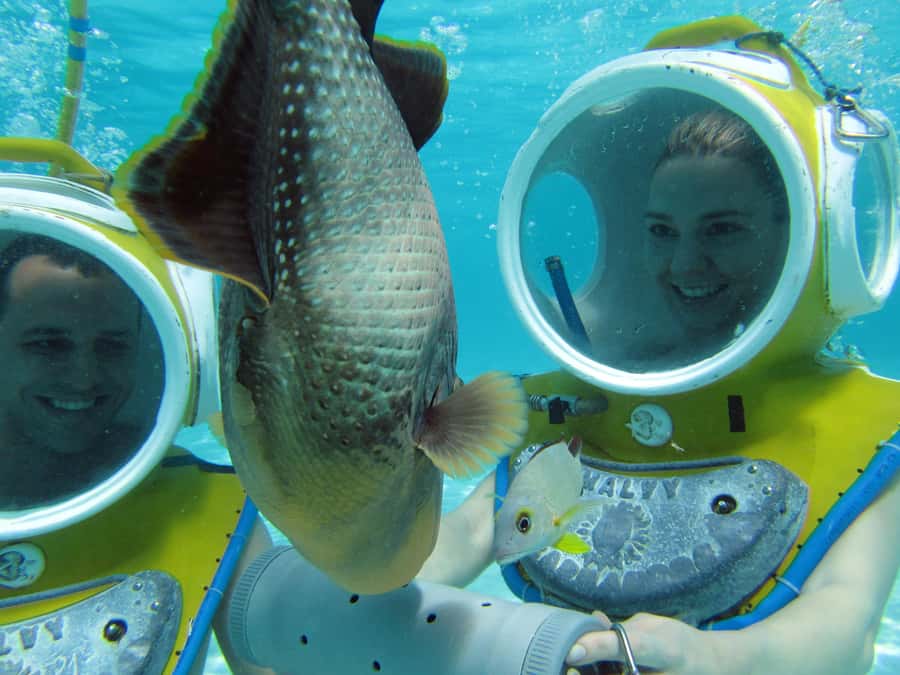
The instructor stays in charge of the underwater procedure, and safety instruction comes before the water entry. The activity provider also requires a signed waiver because of insurance rules.
You should check the medical restrictions before paying. Pregnant people, people with pulmonary or cardiac issues, people with reduced mobility, and people with back or neck problems are not accepted unless they can provide a doctor’s certificate. Asthma is also listed as a restriction, with medical certification required for an exception.
This is not a good choice if you cannot comfortably climb a ladder, wear a helmet, or remain in the water for about 30 minutes. The supplied information does not describe an adapted entry system, so people with mobility concerns should contact the operator before booking rather than assume the setup will work.
Weather does not necessarily cancel the outing. A family group completed the activity in rain and still had a good time, but conditions can affect the anchoring location and the feel of the boat ride. If you want the clearest possible view, ask about the forecast and sea conditions before you go.
One useful detail comes from a participant who wears glasses and had not previously enjoyed an activity like this. That suggests the helmet walk may suit some people who find ordinary snorkeling awkward, though you should ask Aquablue about your own eyewear before departure.
Family appeal and the small-group difference
The minimum age of six makes this one of the more accessible family water activities on Moorea. Children can see fish and stingrays without needing to master snorkeling technique or scuba breathing.
Parents should still be realistic. A six-year-old must listen to the instructor, tolerate the helmet, and feel calm on the ladder and in open water. If your child is nervous around masks or water, the boat and helmet may be more challenging than the marine life is exciting.
The small group format helps. Eight people is a manageable number, and the instructor can give direct help during the equipment change and descent. Several of the strongest points associated with the outing are the staff’s care, clear handling, and ability to make people feel safe.
English and French are offered. That is useful for families and mixed-language groups, especially during the safety briefing. Ask questions before entering the water if any procedure is unclear.
Is $103 a fair price?
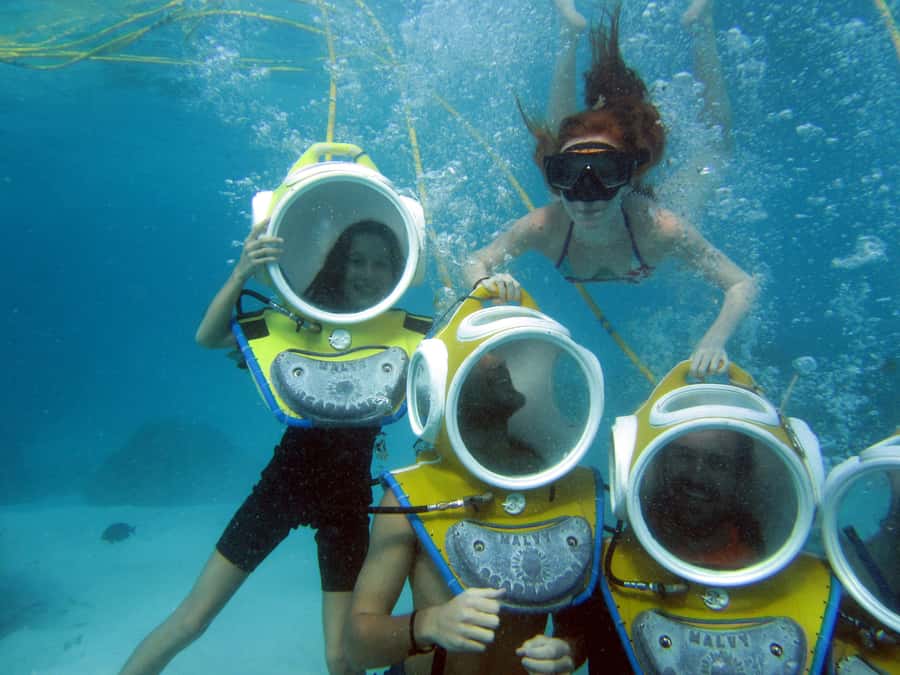
At $103 per person, this is not a cheap way to spend a morning or afternoon in Moorea. The price needs to be measured against what is included: transport from many Moorea locations, a professional instructor, water shoes if needed, the boat ride, equipment, and a 30-minute guided underwater session.
You are paying for an activity that combines equipment, boat access, staff supervision, and a marine-life encounter. If you already have snorkeling gear and only want to look at fish from the surface, a cheaper option may make more sense.
The value improves if you want a special family activity or if normal snorkeling is not appealing. You avoid scuba certification, avoid carrying a tank, and receive close help throughout the process. The experience also offers something distinct from simply floating above the reef: you stand underwater and meet the fish at their level.
Food and drinks are not included, so budget for those separately. You can reserve now and pay later, and cancellation is free up to 24 hours in advance. Those policies help if your Moorea plans may shift, but they do not change the basic question: are you paying for a unique activity or just for time in the water?
Who should book this Moorea activity?
I would recommend it to first-time underwater explorers, families with children aged six and up, and people who want more contact with the lagoon than ordinary snorkeling provides.
It is also a smart option for someone who has never learned scuba skills but wants to know what underwater exploration feels like. The supplied-air helmet removes much of the technical work, while the instructor keeps the experience organized.
I would think twice if you dislike enclosed equipment, have trouble with ladders, or want a long, independent swim. I would also avoid booking until you have medical clearance if you have asthma or any listed heart, lung, back, neck, or mobility issue.
Book it if the idea of standing beside tropical fish and watching stingrays gather sounds more appealing than simply viewing the lagoon from above. Skip it if you are looking for a free-form snorkeling trip or a full scuba session. For the right person, the helmet walk offers a rare middle ground: simple enough for a beginner, yet unusual enough to feel like a true Moorea adventure.
FAQ
Do I need scuba or snorkeling experience?
No. The activity does not require prior scuba or snorkeling experience, but you must be comfortable in and on the water.
How long will I spend underwater?
You will spend approximately 30 minutes underwater. The full activity lasts about 150 minutes, including transport, preparation, instruction, and the boat ride.
How deep does the underwater walk go?
The walk takes place at approximately 12 feet underwater.
How does the helmet provide air?
You remain connected to the boat’s air supply through an air hose. The helmet is placed on your head just before you enter the water and removed when you exit.
What marine life might I see?
You may see triggerfish, butterflyfish, groupers, parrotfish, coral heads, and stingrays. The guide feeds the stingrays so you can observe them at close range.
What is the minimum age?
Children from age six can take part.
What should I bring?
Bring swimwear, a towel, sunscreen, and reef or water shoes. Water shoes are available if you do not have your own, but flip-flop sandals are not suitable. Food and drinks are not included.
Just added in Moorea
- Moorea: Lagoon and Reef Snorkeling Tour with Drinks★ 5.0 · 11 reviews
- Moorea: Small Group Snorkeling Tour with local guide★ 5.0 · 3 reviews
- Half day Private tour of Moorea Safari Albert Pick up hotel★ 5.0 · 4 reviews
- Professional Photo Shooting in Moorea, unique session adapted★ 5.0 · 8 reviews
- Private excursion to Moorea, photo tour & immersive discovery★ 4.5 · 7 reviews
- A Day of Big Game Fishing in a small group★ 4.0 · 16 reviews
- Private Marine Wildlife Adventure with Underwater Photography★ 5.0 · 17 reviews
- Medium Magical Combo in Moorea of 2 hours of Jetski and 3h30 of Quad★ 5.0 · 19 reviews
Sea Scooter & Underwater Tours, compared.
Ariki Adventures: Premium Sea Scooter Turtle Adventure
Read our review →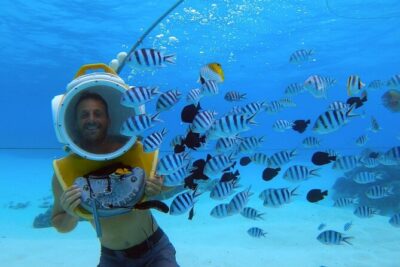
Aqua Safari Introductory Helmet Dive (Underwater Walk)
Read our review →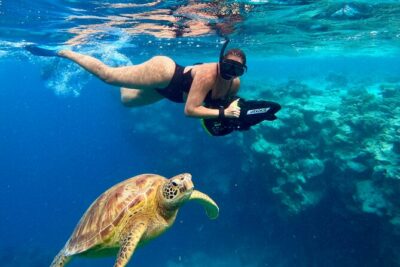
Eco Friendly Sea Scooter Turtle Tour in Rarotonga
Read our review →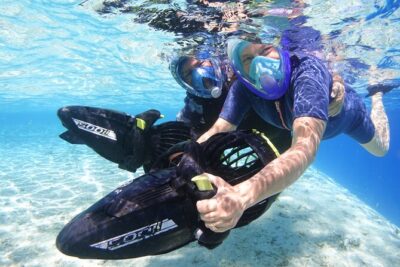
Sea Scooter Jet snorkeling “Moorea Reef Adventure”
Read our review →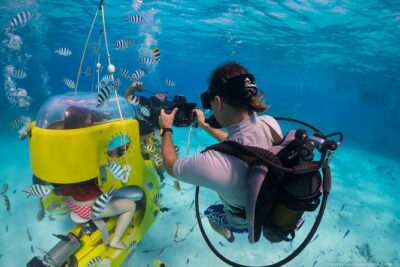
Sea Scooter Snorkel Tour – Lagoon Discovery : Wrecks, Coral Gardens and Tropical Fishies
Read our review →
Browse the lists this tour appears in