
Reviewed · TAHITI
Papeete : walking tour
Papeete makes the most sense on foot, and this tour gives you a clear introduction without turning the city into a rushed checklist. With Pauline, you move from the waterfront and Bougainville Park to the cathedral, municipal market, Assembly of French Polynesia, and Town Hall, with stories about Tahitian culture and French heritage along the way.
I especially like the easy pace and the market visit. You get time to look around, ask questions, and pause at several sites instead of marching from one photo stop to the next. The two-hour length also makes this a smart first activity in Papeete, particularly if you are arriving by ship or have limited time in town.
The main consideration is the city noise. One visitor suggested headsets would help, and that is fair advice. You should also expect sun, heat, and some standing, even though the route is relaxed and wheelchair accessible.
Key points at a glance
- Pauline leads the walk: Her warm, flexible style and clear explanations are the tour’s biggest strengths.
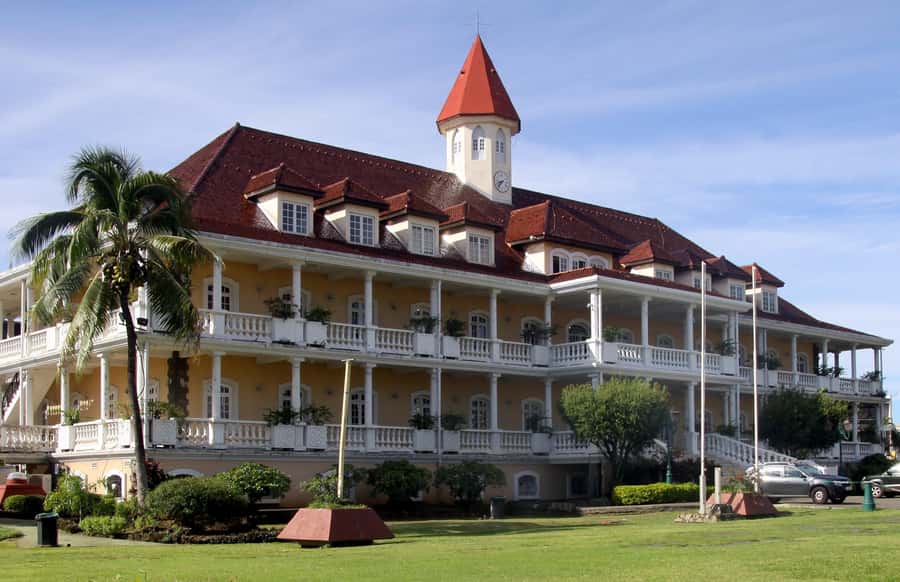
- Five useful city stops: See Bougainville Park, the Assembly, the cathedral, the municipal market, and Town Hall.
- A gentle two-hour route: The walk follows city sidewalks and includes stops for rest and questions.
- The market adds local flavor: You can learn about products, food, and daily life in Papeete.
- A good first-day choice: The tour helps you understand the city before exploring farther around Tahiti.
- Plan for sun and noise: Bring water, a hat, and comfortable shoes, and stay close enough to hear the guide.
Why this Papeete walk works so well
Papeete is often treated as a gateway to Tahiti’s beaches and mountain scenery. That can be a mistake. The city itself brings together Polynesian traditions, French administration, religious buildings, public gardens, harbor life, and a market that gives you a useful look at everyday Tahiti.
This two-hour walk is designed for that first orientation. You are not trying to cover the entire island. Instead, you spend a manageable morning or afternoon getting your bearings in the city center, with a guide who can explain what you are seeing and answer questions as they come up.
Pauline is the guide named for this experience, and her personal approach is central to the outing. She has been praised for explaining Papeete’s past, Tahitian culture, French influence, local plants, products sold at the market, and practical ideas for the rest of your stay. She also adjusted one start time to help avoid the strongest heat, which shows the kind of small flexibility that matters on a walking tour.
The pace is intentionally gentle. You walk on city sidewalks rather than trails, and the route includes several stops. It is a low-impact outing, but you should still be able to walk and stand for two hours. Restrooms are available during the route, according to the tour details and past experience with the walk.
A few more things to do in Papeete worth a look
- Private Transfer Tahiti Airport PPT to Papeete Urban Area by Van
★ 4.5 · 22 reviews - Shared 2 Hour Papeete Walking Tour
★ 5.0 · 13 reviews - Private 2 Hour Walking Tour in Papeete
★ 5.0 · 8 reviews
Starting beside the waterfront at Tahiti Tourisme
The meeting point is inside the Tourist Office of Papeete, near the waterfront. Tell the staff member that you are waiting for Pauline. This is a simple place to meet, but arrive with enough time to find the office and get settled, especially if you are coming from a cruise ship or coordinating with a tight schedule.
Beginning near the water helps set the scene. Papeete’s waterfront is part of the city’s daily rhythm, and it gives you an immediate sense of how the capital connects to the rest of Tahiti. From here, the walk moves into the central streets and public spaces.
The city can be noisy. Traffic and street sounds may make it harder to hear every sentence, especially if you are at the back of a group. Stay near Pauline and do not hesitate to ask her to repeat a point. Headsets are not listed as part of the experience, so anyone with hearing difficulties should consider a private group if available.
Bougainville Park and the city’s public spaces
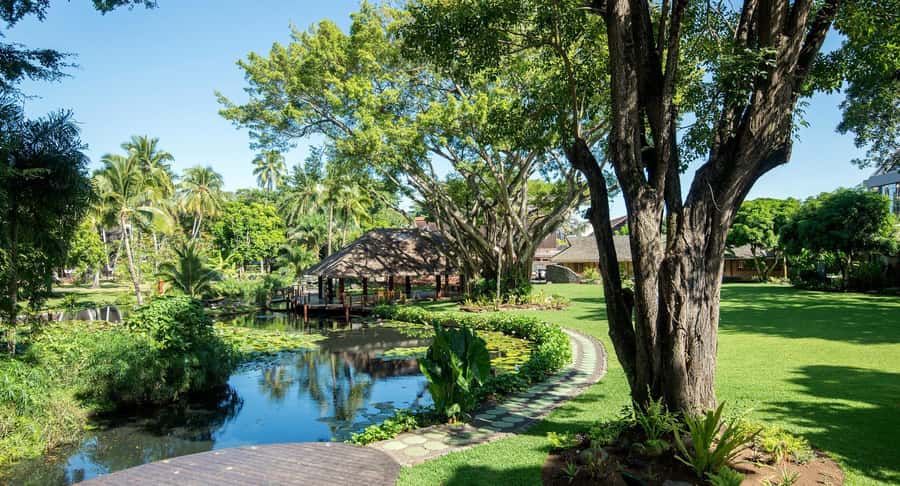
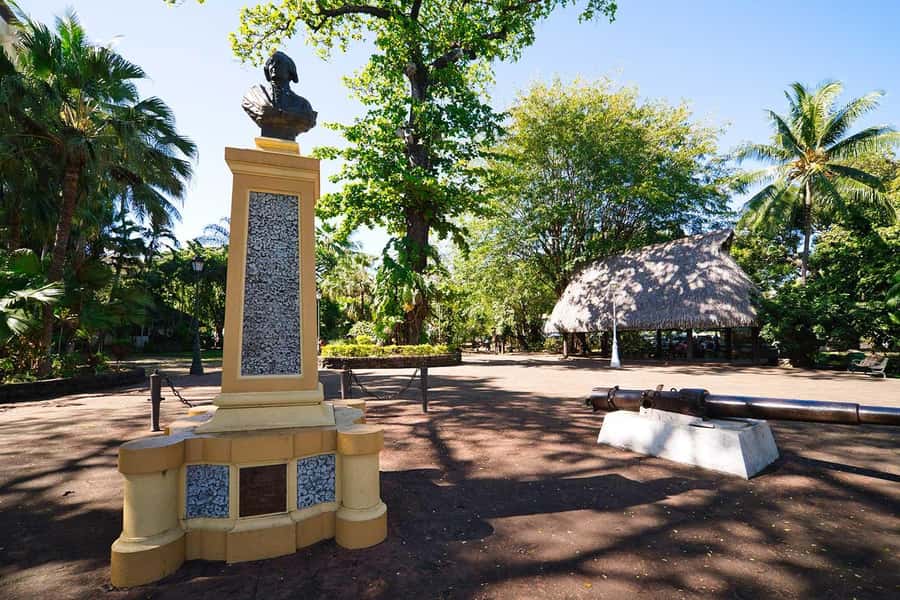
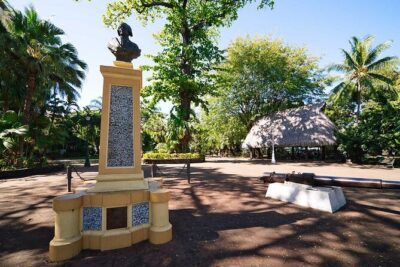
Bougainville Park is one of the early stops. A park visit may sound modest, but it gives Pauline room to explain the city’s plant life, public spaces, and local setting. The tour is not limited to dates and official buildings. It also connects what you see in the streets with the wider culture of Tahiti.
This is a useful place to slow down after the first part of the walk. You can take photographs, listen to the guide, and ask questions without the pressure of keeping up with a moving group. Past visitors have found the pace easy and relaxing, which is especially welcome after a long flight or a morning spent getting off a ship.
The stop also adds balance to the itinerary. You are not spending two straight hours inside buildings or among busy streets. The park offers an outdoor pause before the tour continues toward the civic and religious landmarks of central Papeete.
The Assembly of French Polynesia
The Assembly of French Polynesia gives you a direct look at the territory’s political and French administrative connections. Pauline explains the building and its place in local life, making this more useful than simply walking past an official facade.
Admission to the buildings visited is included, so you do not need to budget separate entrance fees for the Assembly or market. The precise access can depend on opening hours. On weekends and public holidays, the Assembly is closed, and the alternative stop is Jacques Chirac Place.
That change is worth understanding before you book. It does not mean the tour is canceled, but the route will differ from the usual weekday version. Jacques Chirac Place, along with the surrounding public areas, keeps the walk focused on Papeete’s civic life even when the Assembly cannot be entered.
If seeing the Assembly interior is important to you, choose a weekday and confirm the starting time. If you are visiting on a weekend, you will still receive a city tour, but this particular stop will be replaced.
A different sort of day out:
- 5 Hours Tahiti Island Tour – West and East Coast
★ 5.0 · 1,020 reviews - Moorea Street Food Tour
★ 5.0 · 410 reviews - Unique Tahiti Tour – personalised, small group east coast tour
★ 4.5 · 314 reviews - Unique Tahiti Tour – personalised, small group west coast tour
★ 5.0 · 286 reviews
The Catholic Cathedral and Papeete’s layered identity
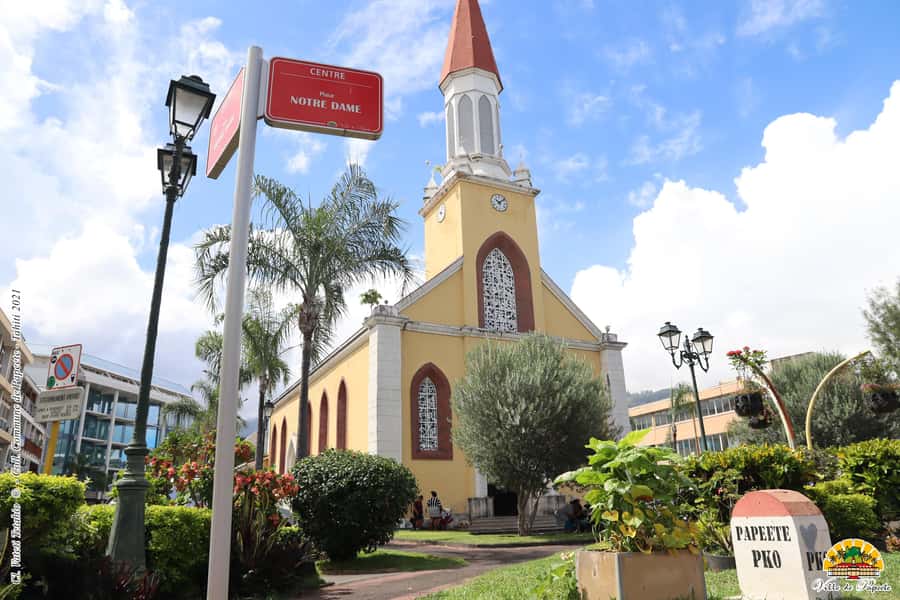
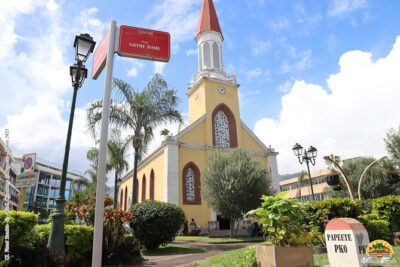
The historic Catholic Cathedral adds another piece to the city’s story. Its presence reflects the meeting of Polynesian society, Catholic traditions, and French colonial influence. Pauline uses the sites to explain how different strands of Papeete’s identity fit together.
This is where a guide adds real value. A cathedral can look impressive from the outside, but a short explanation gives the building context. You learn why it matters locally and how it fits into the story of Tahiti rather than treating it as just another stop for a photograph.
The cathedral also provides a quieter break from the streets. You should still expect to walk and stand, but the itinerary is not built around a fast pace. The guide’s explanations are spaced between stops, making it easier to absorb the information without feeling overloaded.
The municipal market, the liveliest stop
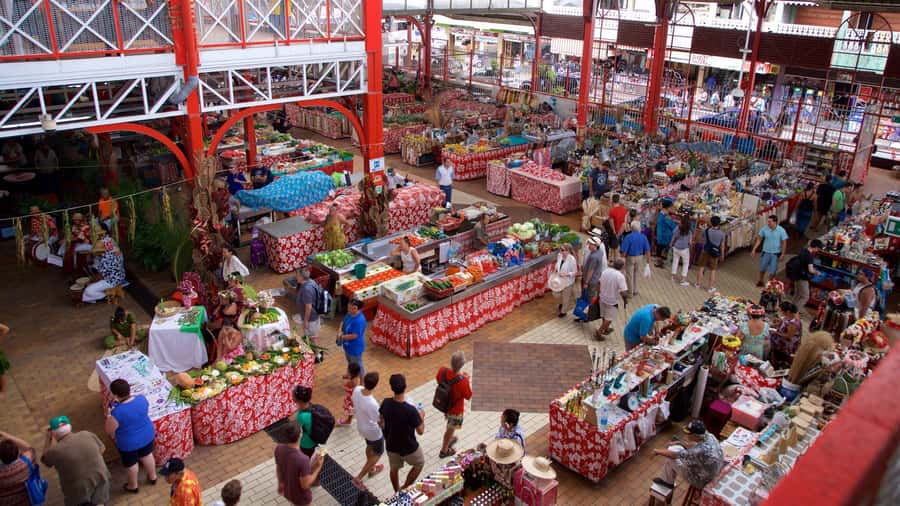
The municipal market is likely to be the most engaging part of the tour for many people. Its colors, food, products, and activity show you a side of Papeete that formal buildings cannot. Pauline explains what you are seeing and can help you understand the difference between a souvenir display and something connected to local daily life.
You may also get practical ideas about what to buy or where to return later. One of the tour’s strengths is its flexibility around questions. You can ask about market products, shopping, local customs, or places to visit during the rest of your time in Tahiti.
The market is also the stop most affected by timing. The supplied information does not promise a specific selection of vendors or products, so what you find can vary by day and opening hours. Treat it as a guided introduction rather than a guaranteed shopping session.
Give yourself room to look without falling behind. Papeete can be noisy here, and the market may make it harder to hear. If you want to make purchases, ask Pauline for advice, but keep the main purpose of the stop in mind: understanding the city’s food, trade, and everyday culture.
Town Hall and Papeete’s civic center
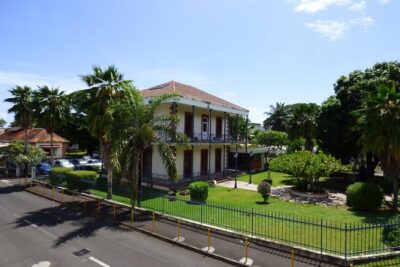
The Town Hall is another major landmark on the route. Its architecture gives you a chance to look at the public face of Papeete and compare it with the cathedral, market, parks, and Assembly.
The tour highlights the architecture of several buildings, so this is not simply a history lecture. Look up at details, notice how public buildings present the city, and ask Pauline about their roles. Her explanations cover both the physical site and the larger story of Papeete.
The Town Hall also helps tie the route together. By this point, you have seen public gardens, religious architecture, political space, market life, and local administration. That combination gives you a rounded first impression of the capital without claiming to show every part of the island.
What Pauline adds to the experience
The strongest reason to choose this walk is Pauline. She is described as warm, humorous, patient, and willing to shape the conversation around your interests. That matters because a city walk can become dry when every stop is treated as a fixed script.
Her subject range is broad. You can expect information about Papeete and Tahiti, but also about French Polynesia more widely, including culture, history, local products, and plant life. The experience is especially useful for questions that a guidebook may not answer well, such as what to do with a few spare hours or which parts of the market deserve a closer look.
She has also handled less-than-perfect conditions well. A rainy outing continued with the guide adapting rather than simply giving up. That does not guarantee dry weather, of course, but it suggests a practical attitude when Papeete’s weather changes.
The tour can be conducted in French, English, or Italian. Multilingual tours are possible, though they are described as uncommon. If language is important to your booking decision, confirm what will be available for your date rather than assuming several languages will be used at once.
How difficult is the two-hour walk?
This is a city walk, not a hike. The route uses sidewalks, and the pace is described as relaxed. There are scheduled stops, opportunities to pause, and restrooms along the way.
Still, do not confuse easy with completely effortless. You need to walk and stand for the full two hours, and Papeete’s heat can make a short urban route feel more demanding. Wear comfortable shoes, bring water, and carry a sun hat. Sunscreen is also a sensible addition, even though it is not listed as required equipment.
The route is wheelchair and scooter accessible according to the activity information. That is a useful advantage, but individual comfort can still depend on heat, traffic, and the amount of time spent standing at each stop. If you need frequent seating or a slower pace, mention that when arranging the tour.
Timing, weather, and the best way to plan
The tour lasts two hours, but the best starting time depends on your schedule and the weather. An earlier start can reduce exposure to the midday heat, and Pauline has suggested an earlier meeting time in at least one case for that reason.
A morning walk can work well if you want to use the afternoon for another part of Papeete. An afternoon start may suit you if you arrive later, but you should check the local time carefully. Reservations use Papeete’s local date and time, which is important if you are booking from another time zone.
Rain does not automatically make the experience impossible. The walk has continued in wet weather, but you should bring suitable protection if rain is in the forecast. The tour remains outdoors for much of its duration, and there is no promise that every stop will feel equally comfortable in poor weather.
Is the $58 price good value?
At $58 per person, the tour is not the cheapest way to stroll around Papeete. You can walk through the city without paying for a guide. The value comes from the access, interpretation, and efficient use of limited time.
The price includes pickup at the Tourist Office, a two-hour guided walk, a multilingual guide, and free admission to the buildings visited. More important, it gives you a local person who can connect the cathedral, market, parks, civic buildings, and Tahitian culture in one clear route.
I consider the price reasonable if this is your first time in Papeete, especially if you have only a day in port. It is also good value for people who want history and cultural context rather than a simple sightseeing loop. A private group is available, which may make the cost easier to justify for families or small parties that want more freedom to ask questions.
The value is weaker if you already know central Papeete well or mainly want shopping time. The market stop is guided, not an extended buying session, and the experience remains centered on walking and explanation.
Who should book this Papeete tour?
I would choose this walk for a first day in Papeete. It gives you a practical orientation, introduces the city’s main central sights, and leaves you with ideas for what to do afterward.
It suits couples, solo visitors, families with older children, cruise passengers, and anyone who prefers a low-impact introduction. The route is also a good fit if you want a guide who can answer questions rather than deliver only a memorized speech.
History and culture are the main focus. If your ideal Tahiti excursion involves swimming, a lagoon, a mountain drive, or wildlife, this is not that experience. You will spend the time in the city center, walking between public and historic sites.
I would also recommend it to anyone interested in French Polynesia beyond its postcard image. The market, cathedral, Assembly, Town Hall, and park show different parts of life in Papeete, and Pauline helps connect them.
What to bring and what to expect
Keep your packing simple:
- Comfortable walking shoes
- A sun hat
- A small bottle of water
- Sunscreen
- Rain protection if the forecast calls for it
Expect a leisurely pace, several planned stops, and time for questions. Expect city noise as well. Stay close to the guide so you do not miss explanations, particularly at the market and along busier streets.
The tour does not promise that every stop will be available every day. On weekends and public holidays, Jacques Chirac Place replaces the Assembly because the Assembly is closed. That is a normal route adjustment, not a flaw, but it is worth factoring into your expectations.
Free cancellation is available up to 24 hours before the tour, and you can reserve now and pay later. Those policies make the activity easier to fit around a changing island itinerary, though the practical details of your reservation should still be checked before booking.
Should you book it?
Book this tour if you want a friendly, informative introduction to Papeete and have two hours to spend on foot. Pauline’s explanations, the easy pace, and the mix of civic buildings, religious sites, public gardens, and market life make it more useful than wandering without context.
Skip it if you want a full-day Tahiti excursion or a nature-based activity. Also think twice if you dislike walking in heat or city noise. For most first-time visitors, though, this is a sensible way to begin, especially on a weekday morning when the Assembly can be included.
FAQ
Where does the Papeete walking tour meet?
Meet inside the Tourist Office of Papeete near the waterfront. Tell the staff member that you are waiting for Pauline, your guide.
How long does the tour last?
The guided walking tour lasts two hours.
What places are included on the route?
The usual route includes Bougainville Park, the Assembly of French Polynesia, the Catholic Cathedral, the municipal market, and Town Hall.
What happens if the tour is on a weekend or public holiday?
The Assembly is closed on weekends and public holidays. Jacques Chirac Place can be arranged as an alternative stop.
Is the tour wheelchair accessible?
Yes. The tour information states that all sites are accessible to wheelchairs and scooters. You should still be able to walk and stand during the two-hour outing.
Which languages are available?
The guide can conduct the tour in French, English, or Italian. Tours in multiple languages are possible, but uncommon.
What should I bring?
Bring comfortable shoes, a sun hat, and water. Sunscreen is also a sensible choice for the outdoor walking route.
Is the tour private?
A private group option is available. The standard experience is a guided city walk, with the private option allowing a group to book more exclusively.
Can I cancel or pay later?
You can cancel up to 24 hours in advance for a full refund. Reserve now and pay later is also available, so you do not need to pay at the time of booking.
Just added in Papeete
- Private 2 Hour Walking Tour in Papeete★ 5.0 · 8 reviews
- Shared 2 Hour Papeete Walking Tour★ 5.0 · 13 reviews
- Private Big Game Fishing Day★ 4.5 · 17 reviews
- Private Transfer: Tahiti Airport to Hotel or Cruise Port★ 4.0 · 24 reviews
- Tahiti Full Day Private Coastal Tour★ 5.0 · 19 reviews
- Private Transfer Tahiti Airport PPT to Papeete Urban Area by Van★ 4.5 · 22 reviews
- Tahiti Half Day Small Group Circle Tour – Waterfalls & Caves★ 4.7 · 25 reviews
- Shared Transfer: Hotel or Cruise Port to Tahiti Airport★ 4.5 · 32 reviews
Walking Tours, compared.
Browse the lists this tour appears in