
Reviewed · TAHITI
Papeete Walking Tour – Tahiti
Papeete becomes much more interesting when you hear it explained by someone who grew up there. This private walk with Christian, a local guide, connects the municipal market, colonial buildings, churches, gardens, and government offices with stories about Tahitian life, politics, and family traditions.
I like the small private format, since you can ask questions and adjust the conversation to your interests. I also like the practical local advice, including where to eat and shop, plus the personal story of Christian’s grandmother’s seamstress shop and the traditional dress she helped design.
The main drawback is the heat. Papeete can be hot, humid, and wet, and you will be on your feet for about two hours. Umbrellas and fans are supplied, but you still need water, a hat, sunglasses, and sensible shoes.
Key points at a glance
- Meet at the waterfront tourist office: The walk begins and ends at Office du Tourisme, near central Papeete’s Front de Mer.
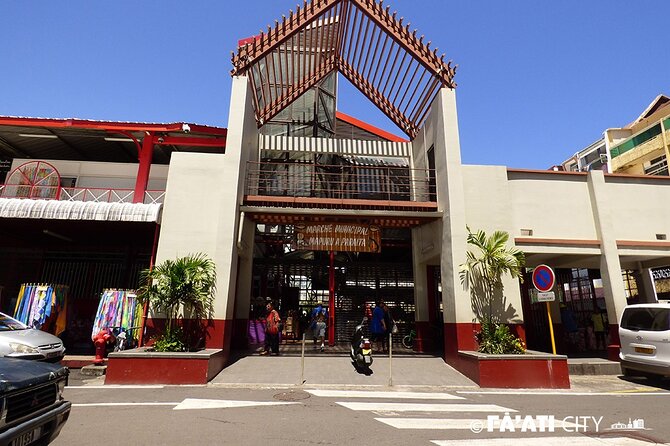
- See the municipal market: Allow about 30 minutes to explore Tahiti’s traditional market place, with time to understand local food and daily commerce.
- Connect colonial buildings with modern Tahiti: The Mairie de Papeete and French Polynesian Assembly add context about government, architecture, and the city’s past.
- Hear a personal Tahitian perspective: Christian brings family stories and memories of growing up in Papeete to the walk.
- Plan for tropical conditions: Sun umbrellas and fans are available, but bring water, sun protection, and shoes made for walking.
- Good value for a first look: At $60.73 per person, the tour makes the most sense if you want context before exploring more of Tahiti on your own.
Why a walking tour helps you understand Papeete
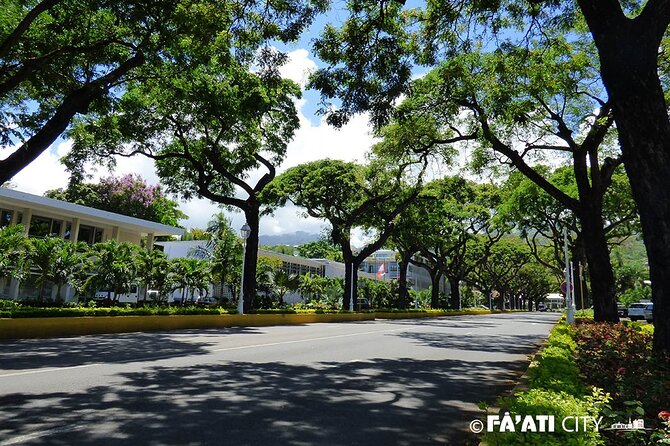
Papeete is easy to pass through quickly. You can stroll the waterfront, browse a few shops, eat something, and leave with attractive photographs. What is harder to see on your own is how the city’s buildings, market, politics, French influence, and Tahitian identity fit together.
That is the useful part of this tour. Christian does not simply point out a building and name it. He connects places with the story of Papeete, including changes over the centuries and the way local life works today. The focus is not only on grand events. Food, customs, local art, shopping, government, and family experience all enter the conversation.
I would treat this as a city orientation rather than a major sightseeing expedition. The route covers central Papeete on foot, with several short stops. You will not spend hours inside a museum or travel around the island. Instead, you get a compact introduction that can help you make better use of the rest of your time in Tahiti.
The private format is especially useful. Only your group participates, so you can ask about subjects that matter to you. If you are curious about politics, architecture, local dress, shopping, or everyday life, the discussion can move in that direction. The walk has a planned route, but it does not have to feel rigid.
A few more things to do in Tahiti worth a look
- Papeete Food Tour
★ 5.0 · 80 reviews - Papeete : walking tour
★ 4.9 · 69 reviews - Papeete Food & City Tour
★ 5.0 · 59 reviews
Starting at the waterfront tourist office
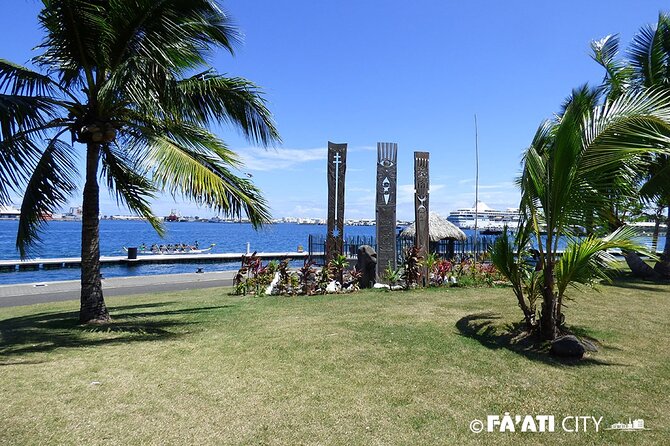
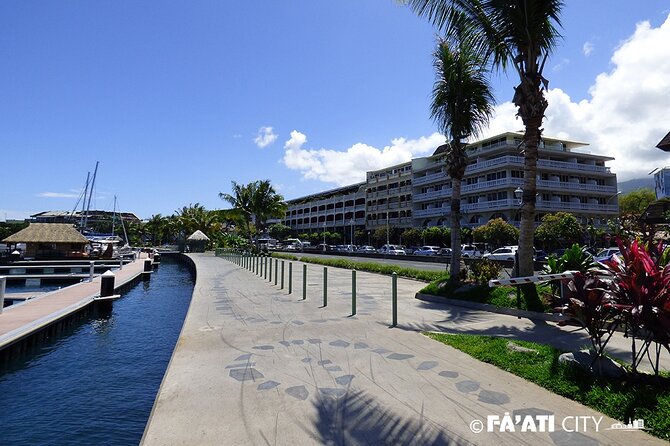
The meeting point is Office du Tourisme, also called Fare Manihini, on the Front de Mer in central Papeete. The activity ends back at this same point, which makes the tour easy to fit into a day of independent sightseeing.
Give yourself time to find the office. One person specifically noted that parking can be difficult near the meeting point because some nearby streets are pedestrian-only. If you are arriving by car, do not assume you can pull up directly outside. The location is near public transportation, but transportation to and from the attractions is not part of the price.
The waterfront setting is a sensible place to begin. You are close to the center of town, the market, and the main civic buildings. For cruise passengers, the location may also be convenient, but you should still check your ship’s schedule carefully and allow time to return before departure. The tour itself lasts about two hours, though the full experience may feel longer if you arrive early or continue exploring afterward.
The municipal market: 30 minutes among everyday Tahiti
The first major stop is the municipal market, with about 30 minutes set aside and no separate admission charge. This is likely the most immediately engaging part of the walk for anyone interested in food, local customs, and ordinary city life.
Markets show you what a place values and eats. Here, Christian can put the stalls and products into a local context rather than leaving you to guess what you are seeing. The market also gives the tour a practical side. You may learn about foods, shopping habits, and places worth returning to later.
Do not expect the market visit to be a long food tour or a formal tasting session. Drinks are not included, and the description does not promise tastings. Think of it as a guided look at one of Papeete’s central meeting places, with explanations that help you notice more than you would during a quick independent visit.
The market is also a good point to ask about what to buy and where to eat. Christian has helped visitors understand the city’s shopping and dining options, so this is a useful time to ask for suggestions. Bring a small bottle of water even if you plan to purchase something during the day. Tropical heat can catch you off guard, especially when you are walking and standing in open areas.
Mairie de Papeete: reading the colonial past
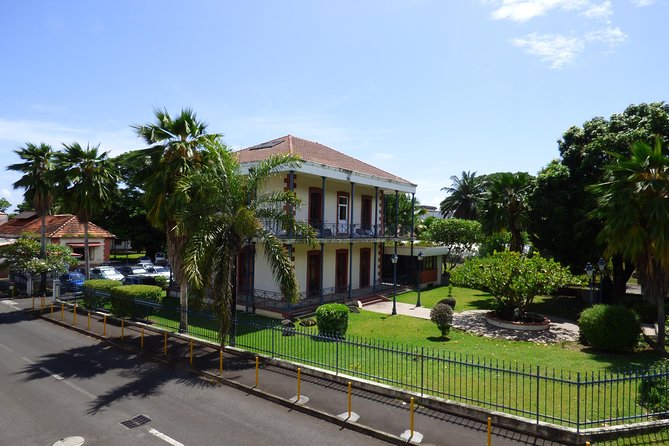
The second listed stop is Mairie de Papeete, the city hall. The visit lasts about 15 minutes and focuses on the building’s colonial architecture and history.
Fifteen minutes may not sound like much, but a short explanation can change how you read a civic building. Instead of seeing only a handsome façade, you begin to notice how French colonial influence shaped public spaces and administration in Papeete. Christian’s approach also places that past beside modern Tahitian life, rather than presenting colonial history as a detached chapter.
This is not a specialist architecture tour. You will probably get more from it if you are interested in how buildings reflect power, government, and cultural change. The stop also breaks up the market visit with a quieter look at the city’s civic center.
The tour’s short stops are a strength for many people. You keep moving, and the walk does not turn into a long lecture in one place. The trade-off is that anyone wanting detailed architectural study may find the treatment brief. The value comes from the connection between each site and the wider story.
A different sort of day out:
- 5 Hours Tahiti Island Tour – West and East Coast
★ 5.0 · 1,020 reviews - Crossing Island of Tahiti 4×4 Mountain, Waterfall, River, Basins
★ 4.5 · 532 reviews - Découvrez le Mana durant la traversée de Tahiti en 4×4 Safari
★ 5.0 · 456 reviews - Moorea Street Food Tour
★ 5.0 · 410 reviews
The French Polynesian Assembly and former royal lands
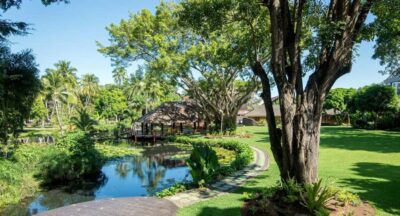
The third listed stop is the Assemblée de la Polynésie Française, the French Polynesian Assembly. The planned visit lasts about 15 minutes, and access to the garden is possible when the institution is open.
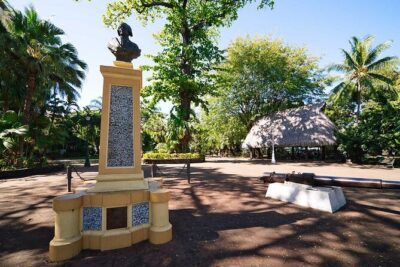
This stop adds a political dimension that many casual visits to Papeete miss. You are near one of the centers of French Polynesian political life, and the grounds are linked with the former lands of Queen Pōmare IV. That pairing gives the stop unusual weight: it connects present-day government with the older royal history of Tahiti.
Because garden access depends on opening conditions, you should not treat entry as guaranteed. Even if the garden is closed, the surrounding explanation remains part of the walk, but the experience may be less rewarding for visitors hoping to see the grounds.
This is one reason the private format helps. You can ask Christian about the relationship between Tahiti’s past and its current political life. The walk is not just a sequence of pretty buildings. It gives you a chance to understand why government, French influence, royal history, and local identity remain important subjects in French Polynesia.
Churches, gardens, and places easy to miss

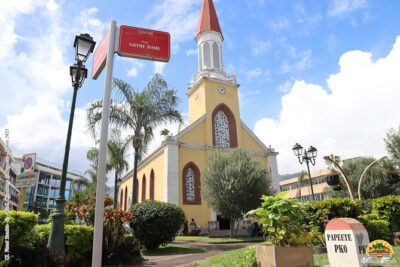
The tour also includes churches, gardens, and other central sights beyond the three named stops. The exact route can vary, especially when weather or building access affects the day, so do not expect a minute-by-minute schedule.
That flexibility is useful. One visitor appreciated being taken to places that matched personal interests instead of following only a fixed list. If you want more time with architecture, local culture, politics, or shopping, tell Christian early. He can shape the conversation and make the walk more relevant to your group.
The route is designed for walking rather than transport. You should expect short stretches between stops, pauses for explanations, and time spent in the heat. A moderate level of physical fitness is required. The tour is not presented as strenuous, but it is still a city walk in a tropical climate.
Sun umbrellas and fans are provided for comfort. That is a thoughtful touch, especially if you are visiting from a cooler climate or stepping ashore from a cruise ship. Still, an umbrella is not a substitute for water, light clothing, a hat, sunscreen, and sunglasses. Rain is also possible. One tour continued despite on-and-off showers, so bring protection for wet weather as well as sun.
Christian’s personal approach to Tahitian history

The strongest reason to choose this experience is Christian’s local perspective. He was born in Papeete and has spoken about growing up in one of the areas visited on the walk. That changes the tone from a standard city lecture to a conversation grounded in memory and place.
His family stories are a notable detail. One example concerns his grandmother’s seamstress shop and a dress she designed that became popular in Tahitian culture. Stories like this help explain how clothing, craft, family work, and cultural identity can overlap.
Christian also brings the present into the discussion. You can expect attention to modern society, politics, local customs, food, art, and daily life, not only dates and names. He is described as patient with questions and flexible about the route and conversation. That matters in a private tour, since the quality of the experience depends heavily on the guide’s ability to listen as well as speak.
The overall rating is 4.8 from 78 ratings, with 95 percent recommending the experience. Those numbers fit the pattern of praise: the guide is repeatedly described as friendly, personal, patient, and strong at explaining both history and current life. One useful limitation is that the experience depends greatly on Christian’s availability and style, so anyone seeking a silent photo walk or a tightly scripted tour may prefer something else.
Is $60.73 per person good value?

At $60.73 per person, this is not the cheapest way to walk around Papeete. You can visit the market and many public areas without paying an admission fee. The price is paying for interpretation, local access, planning, and a private guide, not for entrance tickets or transportation.
That can be good value at the start of a Tahiti visit. Two hours with a local guide can save you from treating Papeete as a quick stop between the airport, a resort, and the beach. You get a framework for understanding what you see, plus practical ideas for food and shopping.
The value is weaker if you only want photographs or a fast market visit. It is also less suitable if you dislike walking in heat or prefer a vehicle-based tour. Since drinks, hotel pickup, drop-off, and transportation to attractions are not included, budget for those separately if you need them.
For a private activity, the price becomes more attractive when shared by a small group. You receive a personal guide rather than joining a large crowd, and you can ask questions throughout. I would especially consider it if this is your first time in Papeete, or if you have only a short period in the capital before heading to another island.
Who should book this Papeete walk?
This tour suits you if you want to understand Tahiti beyond beaches and resort life. It is a good match for people interested in local history, government, French influence, family traditions, markets, architecture, and daily culture.
It also works well for cruise passengers and first-time visitors who need a quick orientation. After the walk, you can return to the market, explore nearby streets, or follow up on Christian’s suggestions for eating and shopping.
You should think twice if you want a major attraction with guaranteed interior access, a long museum visit, or a fully air-conditioned experience. The Assembly garden may be closed, weather can interfere, and the walk requires moderate fitness.
Wear walking shoes and bring a hat or cap, water, and sunglasses. The provider supplies umbrellas and fans, but you remain responsible for handling the tropical conditions. Free cancellation is available up to 24 hours before the start time. If poor weather cancels the tour, you are offered another date or a full refund.
Should you book the Papeete Walking Tour?
I would book this tour if you want a personal introduction to Papeete and care about the story behind the sights. Christian’s family connections, local memories, and willingness to answer questions give the two-hour walk more substance than a simple list of buildings.
I would skip it if your priority is beach time, shopping without commentary, or sightseeing by vehicle. For everyone else, $60.73 is a reasonable price for a private orientation, especially when you are new to Tahiti and want to understand the capital before exploring more of French Polynesia.
FAQ
How long does the Papeete Walking Tour last?
The tour lasts approximately two hours. It begins and ends at the Office du Tourisme in central Papeete.
Where does the tour meet?
You meet at Office du Tourisme, also called Fare Manihini, on the Front de Mer of Papeete at Tahiti Tourisme.
Is transportation included?
No. Transportation to and from the attractions, as well as hotel pickup and drop-off, is not included. The experience is conducted on foot.
What should I bring?
Bring comfortable walking shoes, a hat or cap, a bottle of water, and sunglasses. Sun umbrellas and fans are provided for comfort.
Is the tour private?
Yes. Only your group participates in the private activity.
Can I visit the garden at the French Polynesian Assembly?
You may access the garden when the institution is open. Garden access is not guaranteed at every tour time.
What happens if bad weather cancels the tour?
If poor weather causes cancellation, you will be offered a different date or a full refund. You can also cancel for a full refund if you do so at least 24 hours before the experience starts.
Just added in Tahiti
- Tahiti Classical Coastal Full Day Private Tour★ 5.0 · 7 reviews
- Tahiti E-bike, mtb, vtt Tour with Swimming and Lunch★ 4.0 · 3 reviews
- Tahiti: East or West coast tour (Half Day)★ 4.3 · 4 reviews
- Moorea: Island Tour with Waterfall Hike and Lunch★ 5.0 · 3 reviews
- Moorea Cruise Ships 4×4, Belvedere Magic mount PRIVATE Tours★ 5.0 · 4 reviews
- Albert Tours Excursion Safari – Moorea Safari tours&pick up★ 4.7 · 5 reviews
- Private 2 Hour Walking Tour in Papeete★ 5.0 · 8 reviews
- Half-Day Sailing Trip on the Lagoon of Tahiti Comments★ 4.5 · 14 reviews
Walking Tours, compared.
Browse the lists this tour appears in