
Reviewed · TAHITI
Papeete Food & City Tour
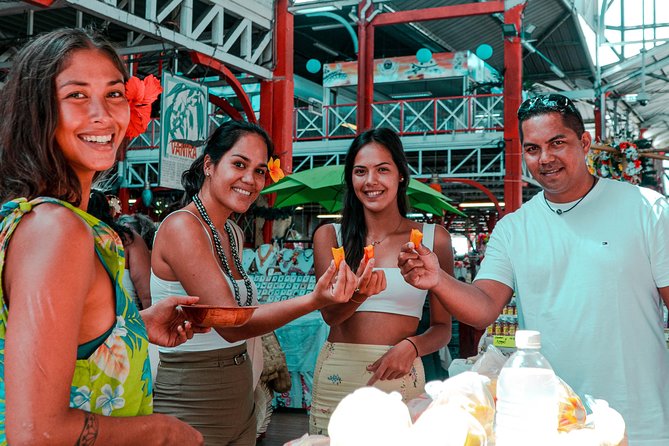
Papeete’s best introduction may be found at a market table, not behind a museum glass case. This three-and-a-half-hour walk leads you through the municipal market and nearby streets, with tastes of fish in coconut milk, taro, fruit, pastries, coffee, and other local favorites along the way. Guides such as Kalei and Orama add the cultural context that turns each bite into a small lesson about Tahiti.
I like the small group of no more than eight and the sheer range of food: Tahitian, French, and Chinese influences all appear on the plate. I also like that the route includes city sights, including Notre-Dame Cathedral and the French Polynesian Assembly, so you get your bearings while you eat. The main caution is simple: this is a walking tour with many tastings, and it suits you best if you can handle a full morning of food and have no strict dietary limits.
Key points to know before booking
- Six to eight tastings: Come with a light breakfast, since the food starts early and keeps coming.
- A true Papeete introduction: The route pairs market food with downtown history and local life.
- Guides with local ties: Kalei and Orama are praised for their warmth, cultural insight, and rapport with vendors.
- Small-group format: The maximum group size is eight, allowing room for questions and personal adjustments.
- Walking plus eating: Comfortable shoes matter, and so do wipes if you try mango with red plum powder.
- Good stopover timing: The tour begins in central Papeete and ends at Cafe Maeva in the municipal market.
Starting with Tahitian breakfast in Papeete
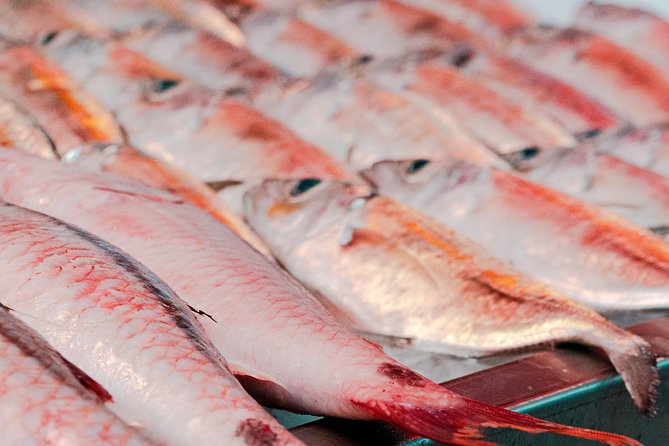
The morning begins at Terre de Vigne on Rue Paul Gauguin, then heads into Papeete’s food scene. The exact order of tastings can vary, but the opening spread may include a local-style breakfast, coffee with coconut milk, beignets, and fish prepared with coconut milk.
One memorable combination described by the tour’s food stops is tuna in coconut milk with carrot and cucumber, served with a traditional Tahitian pastry. You might also try taro or plantain alongside the fish. This is not a polished hotel breakfast designed for cautious palates. It gives you an early taste of the island’s everyday cooking, where fresh seafood, root vegetables, coconut, and French technique meet.
That first plate matters because it sets the tone. You are not just checking off local dishes. You are learning how Tahitian food can feel familiar and new at the same time. Raw or marinated fish may be a surprise if you usually prefer cooked seafood, so tell your guide early about any concerns or restrictions.
The coffee stop also gives the group a chance to slow down. Several tastings come one after another, but there are pauses to sit, talk, and ask questions. The pace is still active, though. This is a food walk, not a long café morning.
A few more things to do in Tahiti worth a look
- Papeete Food Tour
★ 5.0 · 80 reviews - Papeete Walking Tour – Tahiti
★ 5.0 · 78 reviews - Papeete : walking tour
★ 4.9 · 69 reviews
Following Tahitian, French, and Chinese flavors
Papeete’s food culture reflects more than one tradition. During the walk, you may sample Tahitian staples beside French pastries, fried snacks, Chinese-influenced dishes, and modern combinations that bring local ingredients together.
A stop at Lucky Luke may include a beignet de poisson, a fish fritter that one Australian visitor compared to a potato scallop or fish cake. That comparison is useful if you need a familiar reference, but the point is the local version, with its own texture and seasoning.
Another tasting that has made an impression is a burger from Vini Vini, described as a satisfying mix of local influences in one handheld meal. The tour is not limited to old recipes. It also shows how Papeete’s food keeps changing while staying tied to island ingredients.
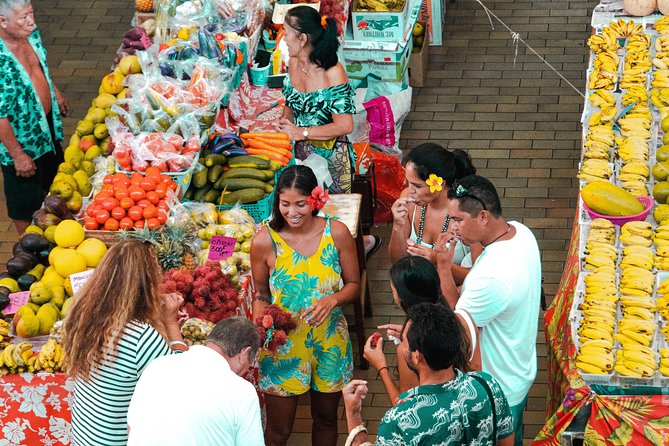
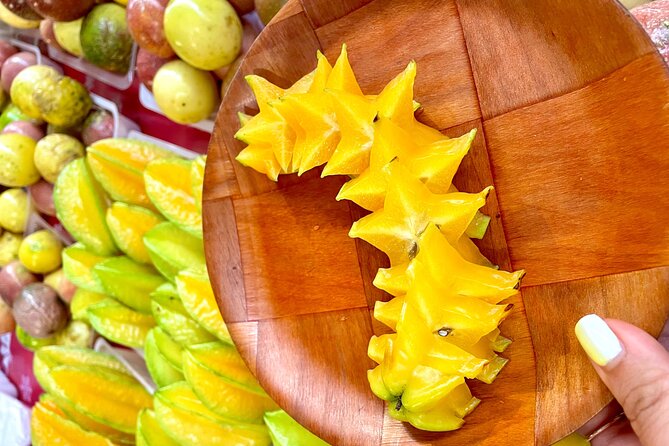
You may try fresh juice in a slushy form, mango with red powder, and other snacks that are easy to miss if you explore alone. The mango is worth noting before you wear white clothing. The powder can be messy, and having a small pack of wipes is a smart move.
The food portions are meant to give you a taste rather than serve a full meal at every stop. Still, the total can be substantial. I would eat only a very light breakfast, perhaps coffee, before meeting the guide. Several people have found the food plentiful enough to finish the morning feeling very full.
Exploring Papeete Municipal Market
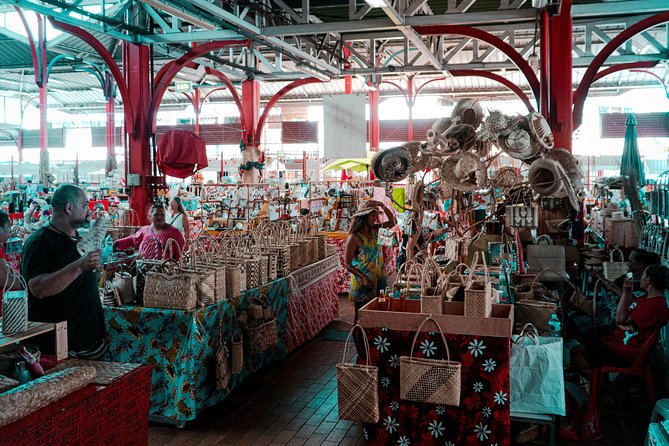
The municipal market, or matete in Tahitian, is the heart of this experience. It is where local shoppers come for seasonal fruit, vegetables, fish, and other daily supplies. A guide can help you read the market as more than a row of stalls.
Look for the seasonal produce and ask about how it is used at home. You may see ingredients that are familiar in name but different in size, variety, or purpose. Your guide can also explain how produce and seafood fit into Tahitian meals, rather than leaving you with a list of dishes and no context.
The market is also the place where the island’s mixed food culture becomes easy to see. Tahitian, French, and Chinese influences appear side by side. You might move from a traditional flavor to a French-style sweet, then on to a snack shaped by another part of Papeete’s past.
This is one reason I think the tour works well on your first day. You gain a sense of what to look for later, how the market is arranged, and which ingredients may be worth buying. The visit is not only about eating. It is a practical orientation to central Papeete.
The end point is Cafe Maeva, up at the municipal market. That is useful if you want to remain downtown afterward. You can continue browsing the market or explore nearby sights on your own, though any optional stop listed as a pass-by is not part of the main guided visit.
Notre-Dame Cathedral and downtown history
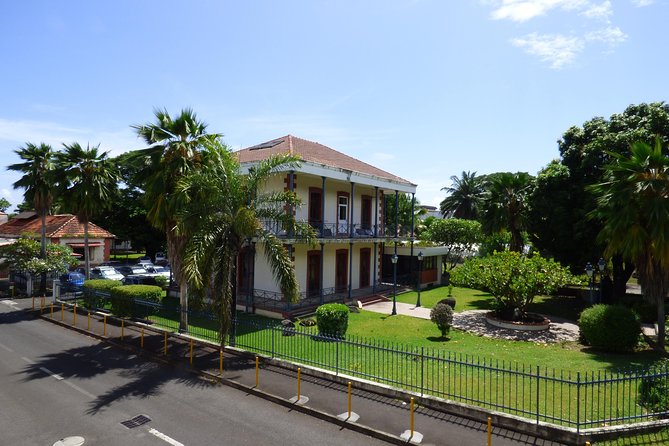
Food takes up most of the morning, but the tour also adds a few cultural and historic stops. At Notre-Dame Cathedral, you can visit inside and outside while hearing a short explanation of its place in Papeete.
The stop is brief, about 10 minutes, so do not expect a full church tour. Its value is the change of pace and the chance to connect the modern market district with the city’s older landmarks. You get a quick look, a few facts, and then return to the food route.
The French Polynesian Assembly is another short stop. The tour visits the outside and main entrance of the presidential palace area, with about five minutes set aside. Again, this is an introduction rather than a detailed architectural visit.
If you want long visits at churches or government buildings, this tour will feel too food-focused. If you want a light layer of city history between tastings, the balance works well. The sights help you understand where you are without turning the morning into a formal sightseeing lecture.
A different sort of day out:
- 5 Hours Tahiti Island Tour – West and East Coast
★ 5.0 · 1,020 reviews - Crossing Island of Tahiti 4×4 Mountain, Waterfall, River, Basins
★ 4.5 · 532 reviews - Découvrez le Mana durant la traversée de Tahiti en 4×4 Safari
★ 5.0 · 456 reviews - Moorea Street Food Tour
★ 5.0 · 410 reviews
What the guides add to the morning
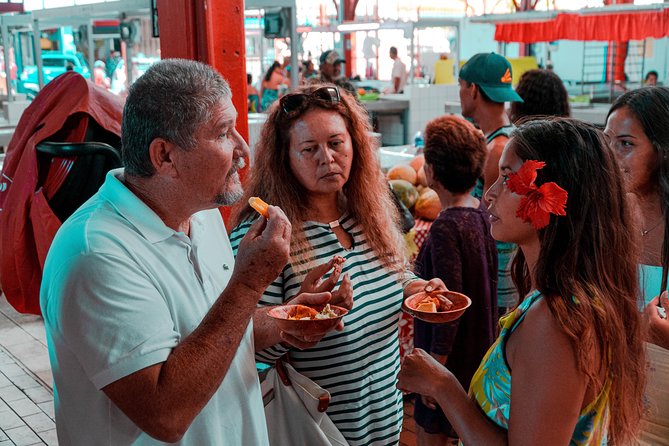
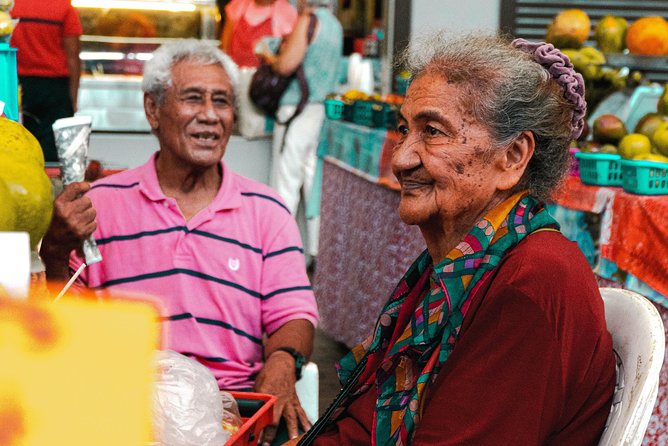
The guide can make or break a food tour, and the strongest part of this experience is the personal style of the leaders. Kalei is frequently praised for being friendly, flexible, and well connected with local shop owners. That matters because the tour depends on small food stops and conversations with people who work there.
Kalei has also adapted the morning to different group needs. If one person asks more questions about history and another wants to focus on food, a small group gives the guide some room to adjust. Jennifer has also led the experience, and Orama is praised for her passion for Polynesian culture and her clear explanations.
You should expect plenty of conversation. The guide may explain the ingredients, the local way of eating, and how different communities have shaped Papeete’s food. Several stops are more meaningful because the guide knows the people behind the counter and can explain why a place matters.
This is not a scripted bus tour. The group walks, stops, eats, and talks. That makes it more personal, but it also means the pace may depend on the group and the food vendors. If you prefer a fixed schedule with no changes, a market walk may feel less predictable.
How much walking and food to expect
The tour lasts about three hours and 30 minutes, with roughly three hours assigned to the Papeete market and surrounding area. You will be on your feet for much of the experience, though there are chances to pause for coffee, food, and rest.
Wear comfortable walking shoes. This is one of the clearest practical points for booking. The city portion is compact, but a series of short walks adds up, especially in warm weather and after several tastings.
Bring water if you prefer to carry your own, though bottled water is included. Coffee or tea is also included, as are the preselected food samples. Alcohol is not included, so do not count on a beer or cocktail as part of the official price. Some food-focused routes may finish with an optional drink nearby, but you should treat that as separate unless the guide says otherwise.
Diet is the biggest limitation. The experience is best for people without strict dietary restrictions because the tastings are preselected and spread across several vendors. You can tell the guide about your needs, but the supplied details do not promise a fully customized menu.
Service animals are allowed, and the meeting point is near public transportation. Most people can participate, but the walking and repeated food stops are worth considering if you have mobility concerns or a very limited appetite.
Is $130 a fair price?
At $130, this is not a cheap way to buy breakfast. It is a guided introduction to Papeete that combines food, market access, local interpretation, and a small amount of sightseeing.
I think the price makes sense if you value variety and personal guidance. Six to eight tastings can add up quickly if you bought each item separately, and the guide saves you from guessing what to order or where to find it. You are also paying for access to local knowledge, not only for the food on the plate.
The value is strongest for a first visit, a short stay, or a cruise stopover. You can get a quick feel for Papeete and learn what deserves more of your time later. The tour ends at the market, so you do not lose the rest of your day.
The value is weaker if you already know Papeete well, want a large sit-down meal, or have strict food rules. You may also find the price high if your main goal is simply to see the market. In that case, you could visit on your own, but you would miss the explanations and the carefully chosen tastings.
The tour is capped at eight people, which helps justify the cost. A small group means you can hear the guide, ask questions, and avoid the impersonal feel of a large excursion.
Timing, meeting point, and stopover use
The stated start point is Terre de Vigne on Rue Paul Gauguin in Papeete. The tour finishes at Cafe Maeva in the municipal market, at BP4588. That start-to-finish plan is handy because you end in a central area with more time for independent exploring.
The listed operating hours show Monday from 9 a.m. to 12:30 p.m. between September 1, 2022, and January 27, 2027. Since the advertised duration is about three and a half hours, check the confirmed start time carefully when booking, especially if you have a ship departure, airport transfer, or another timed activity.
For a stopover, build in a generous buffer. The food walk itself is designed for the morning, but food service, walking pace, and weather can affect the finish. I would not schedule a tight transfer immediately afterward.
Confirmation is provided within 48 hours of booking, subject to availability. The tour also needs a minimum number of participants and good weather. If poor weather or low enrollment cancels the tour, you are offered another date or experience, or a full refund.
Cancellation is free up to 24 hours before the start time. After that point, the payment is not refunded, and changes are not accepted.
Who will enjoy this tour most?
I would choose this experience if you want to understand Tahiti through food rather than only through views. It suits curious eaters who like small portions, local snacks, market produce, and a guide who can explain the people and traditions behind the food.
It is especially useful for:
- First-time visitors who want early orientation in Papeete
- People on a short stopover
- Food lovers who want many tastes instead of one formal meal
- Couples and small groups who enjoy walking and conversation
- Visitors who want Tahitian food alongside French and Chinese influences
- Anyone who wants help finding local places they might miss alone
I would think twice if you need a strict gluten-free, dairy-free, vegetarian, or allergy-controlled menu, since the tastings are selected in advance. I would also skip it if you dislike walking in warm weather or prefer to spend the morning at one relaxed restaurant.
Should you book the Papeete Food and City Tour?
Book it if your ideal first morning includes a local breakfast, market produce, fish in coconut milk, French and Chinese-influenced snacks, and a guide who knows the city personally. The food variety is the main draw, while Notre-Dame Cathedral and the French Polynesian Assembly give the route useful context.
Come hungry, but not too hungry. Wear comfortable shoes, avoid white clothing if mango with red powder appears, and tell the guide about dietary needs before the tastings begin.
For $130, I see this as a good-value orientation tour rather than a simple meal. It gives you a practical start in Papeete, plenty to taste, and a better sense of what makes Tahitian food its own thing. If you want a quiet, formal breakfast or a fully controlled menu, choose another activity. If you want to eat your way into the city, this is a strong pick.
FAQ
How long does the Papeete Food and City Tour last?
The tour lasts approximately three hours and 30 minutes.
Where does the tour start?
It starts at Terre de Vigne on Rue Paul Gauguin in Papeete, French Polynesia.
Where does the tour end?
The tour ends at Cafe Maeva in the municipal market of Papeete.
How many food tastings are included?
The tour includes about six to eight preselected tastings, along with coffee or tea and bottled water.
Is alcohol included?
No. Alcoholic beverages are not included in the tour price.
What happens if the tour is canceled because of weather or low enrollment?
You will be offered a different date or experience, or a full refund.
Just added in Tahiti
- Tahiti Classical Coastal Full Day Private Tour★ 5.0 · 7 reviews
- Tahiti E-bike, mtb, vtt Tour with Swimming and Lunch★ 4.0 · 3 reviews
- Tahiti: East or West coast tour (Half Day)★ 4.3 · 4 reviews
- Moorea: Island Tour with Waterfall Hike and Lunch★ 5.0 · 3 reviews
- Moorea Cruise Ships 4×4, Belvedere Magic mount PRIVATE Tours★ 5.0 · 4 reviews
- Albert Tours Excursion Safari – Moorea Safari tours&pick up★ 4.7 · 5 reviews
- Shared 2 Hour Papeete Walking Tour★ 5.0 · 13 reviews
- Private Big Game Fishing Day★ 4.5 · 17 reviews
Papeete City Tours, compared.




Ferry Transfer between Papeete, Tahiti and Moorea
Read our review →
Private Transfer Tahiti Airport PPT to Papeete Urban Area by Van
Read our review →
Browse the lists this tour appears in