
Reviewed · TAHITI
Shared 2 Hour Papeete Walking Tour
Papeete is easy to treat as a transfer point on the way to Tahiti’s beaches. That would be a mistake. This two-hour walk takes you through the city’s public spaces, religious center, market, and government quarter, with local guide Pauline explaining how Tahiti’s past still shapes daily life.
I like the route for two clear reasons: it covers the main central sights without wasting time on transport, and it gives you useful context before you set off to see more of French Polynesia. I also like that the tour ends at Papeete Town Hall, rather than circling back to the starting point.
The main consideration is the pace and length. Two hours is enough for an overview, not a full city exploration. One visitor felt too much time went into maps and tablet images, while others appreciated those visual aids. If you prefer constant walking and photographs, this may feel a little talk-heavy.
Key Points to Know Before Booking
- Pauline leads the walk in English and French, with explanations of Tahitian history, culture, government, religion, and daily life.
- The five main stops cover Papeete’s essential center, from Bougainville Park to the Municipal Market and Town Hall.
- The tour is useful early in your stay, since Pauline offers ideas for the rest of your time in French Polynesia.
- The Municipal Market adds local texture, with time to see the different areas of this important city gathering place.
- The two-hour format suits cruise calls and short stays, but it does not leave much time for extended shopping or independent wandering.
- The group can reach 25 people, so the experience is shared rather than private.
Why Papeete Deserves Two Hours on Foot
Papeete is not just a gateway to other islands. It is the administrative and cultural center of French Polynesia, and its streets bring together Polynesian traditions, French influence, Christian institutions, and modern government.
A walking tour helps you notice connections that are easy to miss from a vehicle. Bougainville Park introduces the era of European exploration. The Assembly shows how French Polynesia is governed today. The cathedral points to the major religious changes that reshaped island life. The market brings those stories into the present.
That progression is the real value of the tour. You are not simply collecting buildings. You are moving from exploration, to political power, to religion, to everyday commerce, then finishing at the city hall.
The route lasts about two hours, including roughly 15 to 20 minutes at each named stop and about 35 minutes of walking or travel time between them. The pace has been described as comfortable, and that matters in Papeete’s warm climate. You get a city introduction without committing half a day.
A few more things to do in Papeete worth a look
- Papeete : walking tour
★ 4.9 · 69 reviews - Private Transfer Tahiti Airport PPT to Papeete Urban Area by Van
★ 4.5 · 22 reviews - Private 2 Hour Walking Tour in Papeete
★ 5.0 · 8 reviews
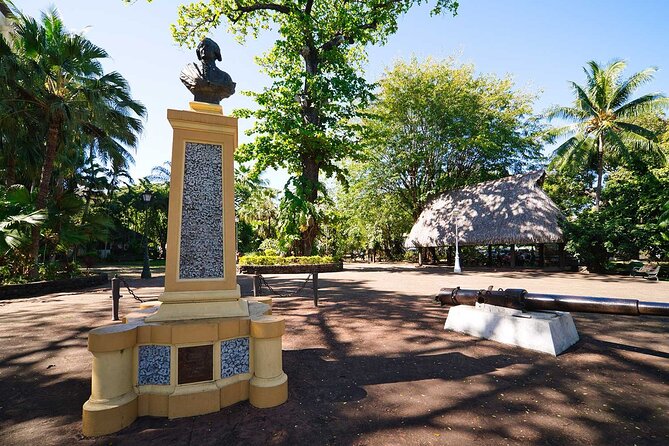
Starting at Bougainville Park
The meeting point is the Office du Tourisme on the Papeete waterfront, at Fare Manihini on Boulevard de la Reine Pōmare. From there, the walk reaches Bougainville Park, also called Parc Bougainville.
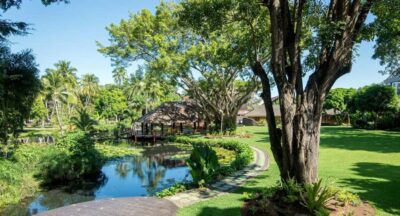
This first stop provides the historical frame for the entire experience. Pauline discusses Captain Bougainville, other European explorers, and the missionaries who helped shape Tahiti’s recorded history. The park is a good place to begin because it connects a pleasant public space with the complicated story of outside contact.
You should expect about 15 minutes here. That is enough for an introduction, but not enough for a lengthy lecture on every period of Tahitian history. The strength of this stop is its role as a starting point. It gives you names and events that make the later parts of Papeete easier to understand.
I would pay attention to how the guide explains the difference between Polynesian life before European arrival and the changes that followed. The tour is at its best when historical events are tied to places you can actually see, rather than treated as a list of dates.
French Polynesia’s Assembly and the Work of Government
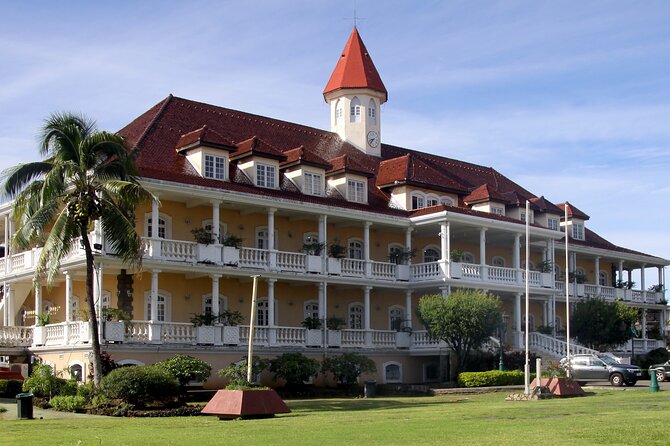
The route continues to the Assemblée de la Polynésie Française, where you spend about 20 minutes.
This is one of the more distinctive stops because it moves beyond postcard scenery. You learn about chiefs and monarchs, then about the government systems that developed later. The stop connects older forms of authority with the political structure of French Polynesia today.
For many people, this will be new ground. A beach excursion can show you the natural beauty of Tahiti, but it rarely explains how the territory functions politically. Here, Pauline gives you a basic introduction to the institutions that govern French Polynesia.
The building itself is less important than the subject. You are not visiting a museum with a long interior route. Instead, you are getting a short, place-based explanation of power and public life. That makes the stop especially useful if you want to understand Tahiti as a lived-in society rather than a holiday backdrop.
The tour includes free admission to the buildings visited. Still, you should not expect a formal government tour or access to every room. The supplied details describe an exterior and cultural stop, with historical and political explanation along the way.
Papeete Cathedral and the Story of Religion
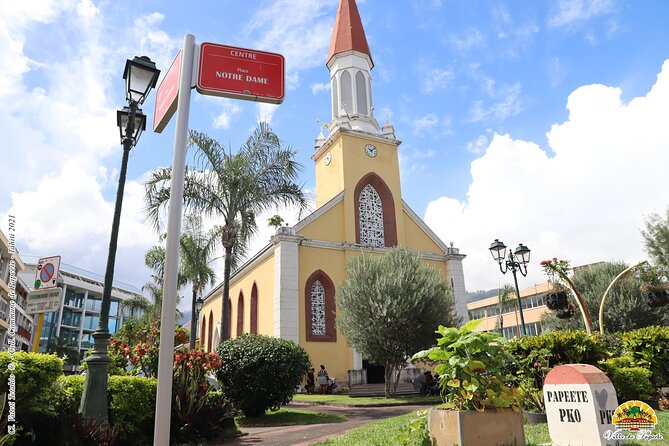
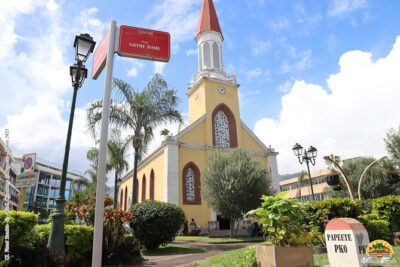
Next comes the Roman Catholic Archdiocese of Papeete, including the Catholic Cathedral of Papeete. Plan on about 15 minutes.
This stop explains the arrival of Protestantism and later Christianity in the islands, along with the role of the Catholic Church. Religion is a major part of Tahiti’s colonial and social story, so this short visit adds an important layer to the earlier discussion of explorers and missionaries.
The cathedral also gives the route a change of mood. After parks and public administration, you enter a place associated with worship and community. The focus remains historical and cultural, rather than devotional.
I like this inclusion because it keeps the tour from becoming a simple list of civic buildings. Papeete’s identity was shaped by religious change as much as by French administration and commercial growth. A 15-minute stop cannot cover every detail, but it can help you recognize why churches matter in the city.
If you are mainly interested in food, shopping, or architecture, this may be the least immediately exciting stop. Give it a little patience. Its value comes from the context Pauline provides.
A different sort of day out:
- 5 Hours Tahiti Island Tour – West and East Coast
★ 5.0 · 1,020 reviews - Moorea Street Food Tour
★ 5.0 · 410 reviews - Unique Tahiti Tour – personalised, small group east coast tour
★ 4.5 · 314 reviews - Unique Tahiti Tour – personalised, small group west coast tour
★ 5.0 · 286 reviews
The Municipal Market, Papeete’s Everyday Center

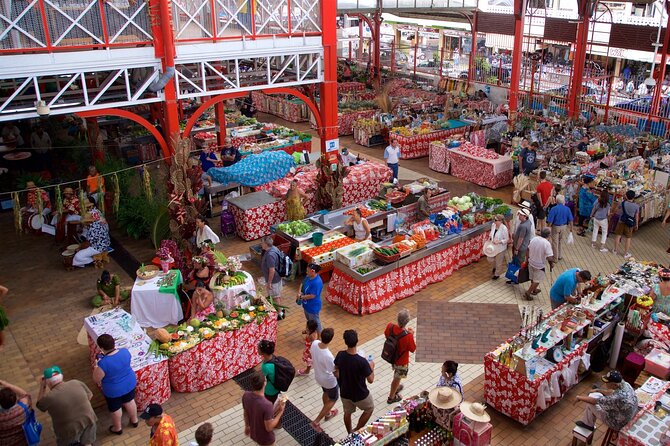
The Municipal Market receives about 20 minutes, making it one of the longer stops on the route.
This is where the tour shifts most clearly from formal history to daily life. The market has different areas that reflect the range of Tahitian culture, and Pauline explains what you are seeing as you move through them. You get a chance to observe the way local commerce, food, and social life come together in central Papeete.
The market is also a practical stop. You may want to return later for a closer look, more shopping, or a longer meal. Twenty minutes gives you an introduction, but it is not enough for leisurely browsing. If you are hoping to buy gifts or stop for lunch, plan extra time after the tour.
The market may feel busy, especially compared with the more open park and government stops. That is part of its appeal, but also one reason to keep your belongings secure and stay with the group. The supplied information does not promise food or tastings, so do not book this expecting a culinary tour.
I would treat the market visit as a preview. Let the guide point out the sections that interest you, note what you want to revisit, then return independently if your schedule allows.
Finishing at Papeete Town Hall

The final named stop is Mairie de Papeete, the yellow Papeete Town Hall on Rue des Remparts. The visit lasts about 15 minutes.
The building is presented as an example of colonial architecture and gives the tour a strong visual finish. Its yellow exterior makes it easy to recognize, and its civic role ties back to the earlier stop at the French Polynesian Assembly.
Ending here is practical. You finish near the center of Papeete rather than being taken back to the waterfront office. From this point, you can continue exploring on your own, return to the market, make your way toward transport, or follow Pauline’s suggestions for the rest of your day.
The end point is listed as FC7M+3M3, Rue des Remparts, Papeete. Check the exact map location before booking if you have a tight connection, since the start and finish are different places.
How Pauline Shapes the Experience
The guide is central to this tour. Pauline leads in English and French, and her role goes beyond pointing out landmarks. She explains geological, historical, cultural, and political topics, and she also shares practical ideas for the rest of your stay.
The strongest praise focuses on her clear explanations, friendly manner, and ability to keep the walk moving at a comfortable speed. Several comments describe the two hours as passing quickly, which is a good sign for a tour built around spoken interpretation.
Pauline also uses an iPad and maps to show visual material. This can help when discussing places, historical figures, or changes that are not obvious from the street. One person felt that the maps and tablet took attention away from seeing more of the city. That is a fair concern, particularly if you prefer a guide who talks while walking instead of stopping for visual aids.
Your ideal experience depends on what you want from a walking tour. If you like historical explanation and visual context, the tablet should add value. If you want a fast-moving photo walk, you may find the pauses less satisfying.
What the $58 Price Really Buys You
At $58 per person, this is not a bargain-priced stroll. The tour includes free admission to the buildings visited, but there are no bottled water, umbrella, lunch, or snacks included.
The value rests mainly in the guide’s time and interpretation. You are paying for a structured two-hour introduction with a local guide, not for transport, meals, or a major attraction ticket. That makes the price easiest to justify if you are new to Papeete and want to understand the city quickly.
The tour is also useful for a short visit. You do not need to spend time planning a route, checking maps, or working out how the landmarks relate to one another. You arrive at the tourism office and let the guide handle the sequence.
For a longer stay, the value depends on how much you enjoy guided history. You can see the outside of many central sights independently, but you will not automatically get the same explanation of Tahitian politics, religion, exploration, and local life.
The group can include up to 25 people. That keeps the cost below a private tour, but it also means you should not expect a fully personal experience. If the group is large, stay close enough to hear clearly, especially during street crossings and market sections.
Timing, Weather, and What to Carry
The tour does not include bottled water or an umbrella, so bring both if the forecast suggests heat or rain. Papeete’s weather can change, and a two-hour walk is long enough for sun or a shower to affect your comfort.
Wear shoes suitable for ordinary city walking and bring protection from the sun. The tour requires a moderate level of physical fitness, though the published pace is described as manageable. There is no promise of special accessibility arrangements, so contact the provider if you have mobility concerns.
Morning or late morning is a sensible choice. One piece of feedback specifically recommends that timing for better enjoyment of the monuments. Earlier hours can also leave you with more of the day for the market, lunch, or other plans, though the tour details do not guarantee a particular temperature or crowd level.
You receive confirmation at booking, and the activity uses a mobile ticket. Free cancellation is available up to 24 hours before the start time. Within 24 hours, the payment is not refunded, and changes are not accepted.
Who Will Get the Most From This Walk
I would recommend this tour to you if you:
- Have only a few hours in Papeete
- Want a useful orientation at the start of your stay
- Prefer history and culture to a simple photo stop
- Like exploring on foot without managing the route yourself
- Want advice about what to do after the tour
- Are comfortable walking with a group of up to 25 people
It is particularly practical for a short stop in the city. The route is compact, the guide handles navigation, and the end point leaves you in a useful part of central Papeete.
You may want something else if you are looking for a private tour, a food-focused market experience, extensive interior visits, or a long architectural walk. The tour gives you an overview, not hours of unstructured time at each site.
Should You Book the Papeete Walking Tour?
Book it if you want Papeete to make sense before you move on to beaches, resorts, or other islands. Pauline’s route links exploration, government, religion, commerce, and colonial architecture in a manageable two-hour walk.
I especially like it as an early-stay activity. You can use the advice from the guide to shape the rest of your visit, then return to the market or other central areas with better bearings. At $58, it is worth the cost for a guided cultural introduction, but less so if you only want to photograph landmarks and keep moving.
Bring water, protect yourself from the weather, and allow extra time after the official finish. For a first look at central Papeete, this is a sensible and informative choice.
FAQ
How long is the Papeete walking tour?
The tour lasts approximately two hours. The named stops take about 85 minutes in total, with the remaining time used for walking and travel between locations.
Where does the tour begin?
It begins at the Office du Tourisme, Fare Manihini, Front de Mer de Papeete, Tahiti Tourisme N91, Quartier du Commerce, BP 65, 98714 Boulevard de la Reine Pōmare, Papeete.
Where does the tour end?
The tour ends at Mairie de Papeete, FC7M+3M3, Rue des Remparts, Papeete.
Which places are included?
The route includes Bougainville Park, the Assemblée de la Polynésie Française, the Roman Catholic Archdiocese of Papeete and cathedral, the Municipal Market, and Papeete Town Hall.
Is admission included?
Yes. Admission to all buildings visited is included at no extra charge.
Is the tour offered in English?
Yes. Pauline guides in English and French.
How many people can join the tour?
The maximum group size is 25 people.
What is included in the price?
The price includes the guided walking experience and free admission to the buildings visited. Bottled water, an umbrella, lunch, and snacks are not included.
Just added in Papeete
- Private 2 Hour Walking Tour in Papeete★ 5.0 · 8 reviews
- Private Big Game Fishing Day★ 4.5 · 17 reviews
- Private Transfer Tahiti Airport PPT to Papeete Urban Area by Van★ 4.5 · 22 reviews
- Private Transfer: Tahiti Airport to Hotel or Cruise Port★ 4.0 · 24 reviews
- Tahiti Full Day Private Coastal Tour★ 5.0 · 19 reviews
- Shared Transfer: Hotel or Cruise Port to Tahiti Airport★ 4.5 · 32 reviews
- Tahiti: Tour of the East or West Coast (Half Day)★ 4.5 · 27 reviews
- Tahiti Half Day Small Group Circle Tour – Waterfalls & Caves★ 4.7 · 25 reviews
Walking Tours, compared.
Browse the lists this tour appears in