
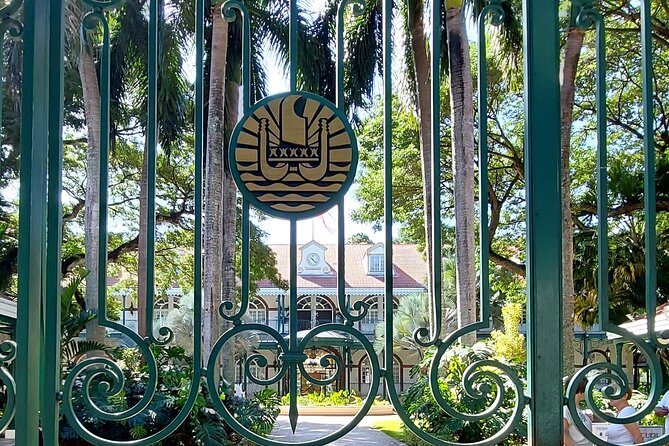
Reviewed · TAHITI
Papeete City Tour, 3hours (on Tahiti)
Papeete’s story begins with a spring, a church, and a name that means water basket. This private tour gives you that local frame before moving through the Presidential Place, Assembly gardens, cathedral, street art, and market. I like the mix of civic life and everyday Papeete, and I like that Lydia can adjust the route to your interests, walking ability, and the weather.
The private format is another strong point: a group of eight can share the $399 price, and you get pickup, cool vehicle transport, and a guide focused on your questions. The main limitation is time. Three hours and 15 minutes goes quickly, so you may need to choose between a relaxed market visit, the pearl museum, and staying in town for a meal.
Key points to know before booking
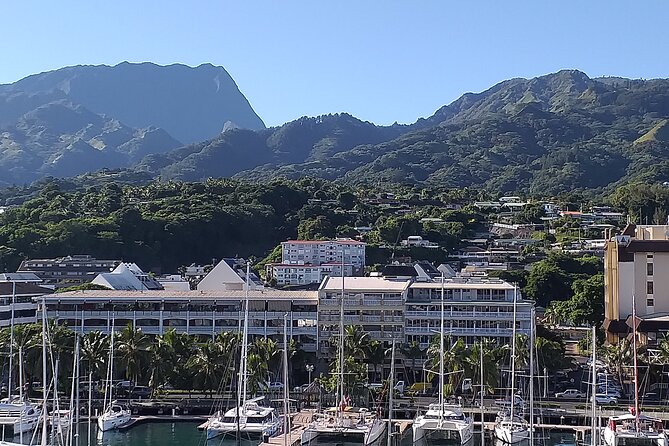
- Papeete’s natural springs shape the story: See the Queen’s Bath near the Assembly gardens and learn why the town’s name refers to water.
- Government sites add modern context: Visit the Presidential Place and French Polynesia’s Assembly rather than seeing Papeete only as a shopping stop.
- The market is the practical highlight: Allow about 45 minutes for the Paraita Market, with snacks and local shopping available.
- Lydia is the key to the experience: She is described as an enthusiastic guide who adjusts the tour to interests and weather.
- The private rate works best for groups: At the full capacity of eight, the price is about $49.88 per person.
- The pearl museum is optional: You can include a 20-minute visit or stay in central Papeete for lunch or dinner.
Why this Papeete tour feels different

Many short city tours reduce Papeete to a drive past a cathedral and a market. This one gives you a stronger starting point: the town’s name, water sources, colonial government, French connection, and modern Polynesian life all fit into the same route.
You begin with pickup from your accommodation or an agreed meeting point. Since this is a private activity, your group does not need to match another party’s pace. That matters in Papeete, where you may prefer a slow market visit, a short walk, or more time listening to local history from the vehicle.
Lydia is the named guide associated with this experience. The available feedback describes her as enthusiastic, flexible, and able to adjust the tour around personal interests and changing weather. One group enjoyed the first outing enough to take a second tour around town. You should still think of the experience as a guided overview rather than a full-day cultural program. The schedule covers several important places, but each stop is short.
A few more things to do in Papeete worth a look
- Papeete : walking tour
★ 4.9 · 69 reviews - Private Transfer Tahiti Airport PPT to Papeete Urban Area by Van
★ 4.5 · 22 reviews - Shared 2 Hour Papeete Walking Tour
★ 5.0 · 13 reviews
Papeete’s story starts at the Queen’s Bath
The first part of the tour sets the tone. Papeete was officially created in 1890, but its earlier story reaches back to 1820, when Pastor Crook built a church on the seafront. That site is now occupied by the main Protestant church.
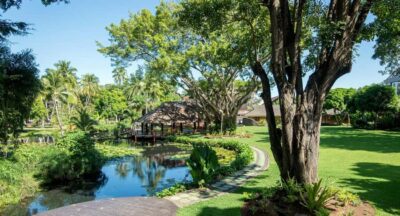
The name Papeete means water basket. The explanation is tied to the area’s natural springs. One spring, called the Queen’s Bath, sits in the government or Assembly gardens. This gives you a useful way to understand the town: water was not just scenery, but part of the reason this area mattered.
At the Assembly gardens, you spend about 20 minutes. The gardens sit on former wetlands near the spring, and the nearby Assembly is where representatives debate laws for French Polynesia. I like this stop because it gives the tour more substance than a standard photo drive. You are not only looking at a government building. You are hearing how local government functions within the French Republic.
The stop is free, and the gardens offer a change of pace from the traffic and commercial center. Do not expect a long political tour or a formal interior visit. The value is in the explanation and the setting.
The Presidential Place and French Polynesia today
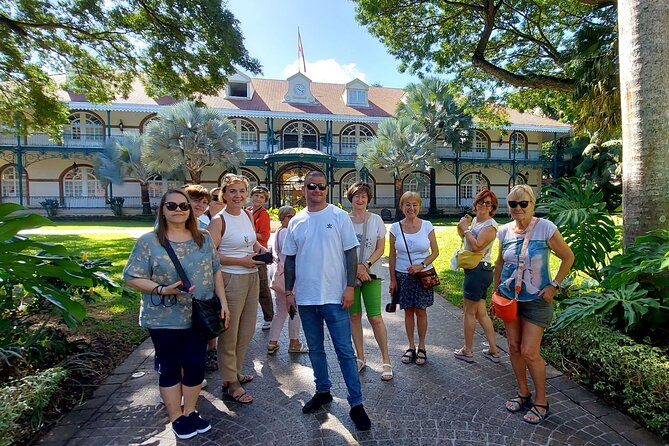
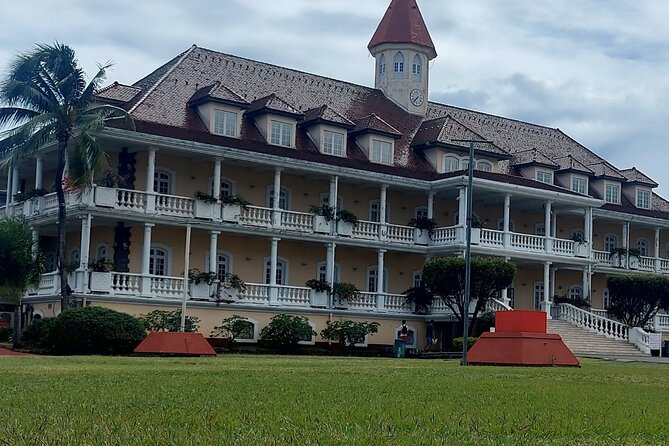
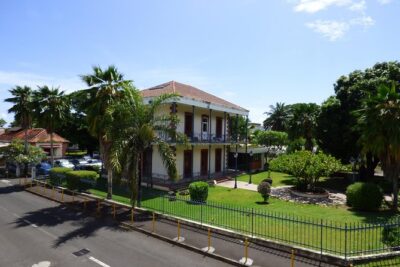
The tour also stops at the Présidence de la Polynésie française, known in English as the Presidential Place. The colonial-style building was completed in 2004. You spend about 15 minutes here, learning about the government, the current president, and French Polynesia’s place within France.
This is one of the best parts of the route for anyone who wants current context. Tahiti is often presented only through beaches, lagoons, and black pearls. The Presidential Place reminds you that French Polynesia is also a modern political community with its own representatives, laws, and relationship with France.
The guide also explains how Tahiti became French in the 1840s and how that connection affects Polynesian life today. That background helps you read the rest of Papeete. The cathedral, town hall, market, and government buildings are not isolated sights. They reflect layers of Polynesian, French, religious, and civic influence.
The building itself is a short stop, so you will not spend much time inside or on a formal institutional tour. If political history is your main interest, use the drive between stops to ask questions. The private format makes that possible.
Street art, the cathedral, and Papeete town hall
The central Papeete portion can be done by driving past or walking, depending on your ability and preference. That flexibility is useful. You can see more on foot, but you do not need to force yourself into a walk if heat, traffic, or mobility makes that uncomfortable.
The route includes the cathedral, which sits on ground once associated with Polynesian birthing practices. That detail adds a striking cultural layer to an otherwise familiar city sight. It also shows why a local guide is helpful here. Without explanation, you might see only another church in the center of town.
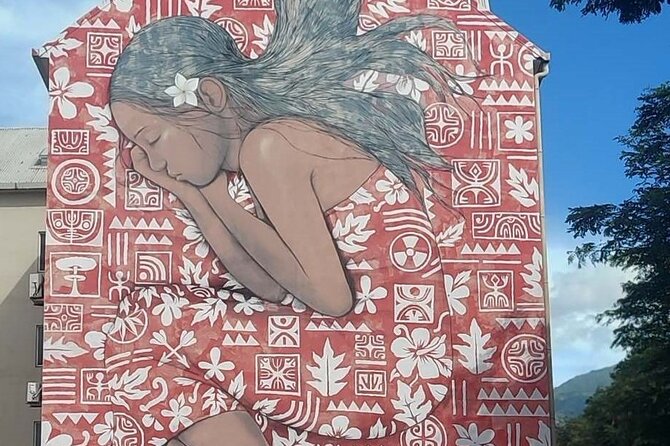
You also pass street art between the cathedral and Papeete town hall. The choice to walk or drive changes the feel of this section. Walking lets you take in the art at a slower pace, while driving keeps the schedule under control and helps if the weather turns wet.
Papeete town hall was built in the style of Queen Pomare VI’s palace. It is an especially useful stop for seeing how royal Polynesian references remain part of the city’s public architecture. The tour does not treat Papeete as a museum frozen in the past. Instead, it connects historic symbols with the working capital you see today.
Plan on roughly 15 minutes for this central section. That is enough for an overview, not enough for a detailed art walk or extended photography session. If street art is a major interest, tell Lydia early so you can decide how to use the limited time.
A different sort of day out:
- 5 Hours Tahiti Island Tour – West and East Coast
★ 5.0 · 1,020 reviews - Moorea Street Food Tour
★ 5.0 · 410 reviews - Unique Tahiti Tour – personalised, small group east coast tour
★ 4.5 · 314 reviews - Unique Tahiti Tour – personalised, small group west coast tour
★ 5.0 · 286 reviews
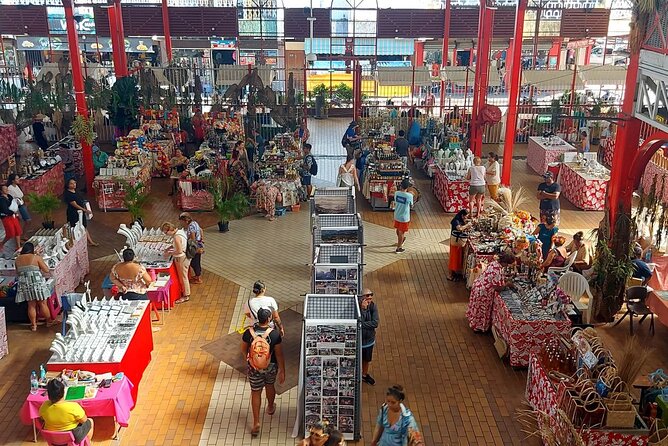
Forty-five minutes inside Paraita Market
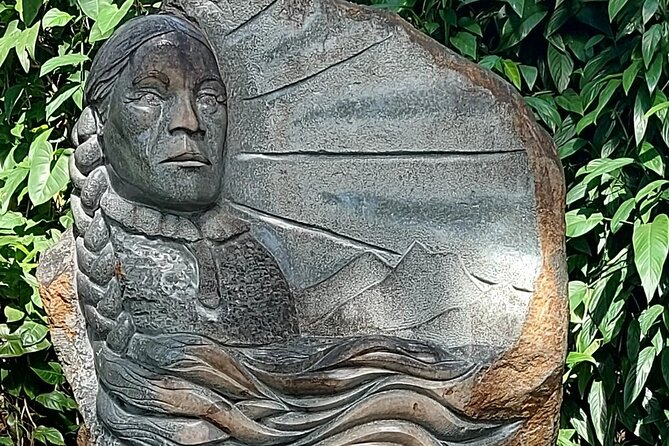
The Paraita open-air market is the longest scheduled stop, at about 45 minutes. It is also likely to be the most hands-on part of the tour.
The market has been on this site since 1869. It was renovated in 1987, when the size was tripled. The market opens from 5 a.m. to 4 p.m. Monday through Saturday, and from 4 a.m. on Sunday. Those hours matter if you are planning the tour around a cruise arrival, an early flight, or a meal later in the day.
The guided portion focuses on the market’s lower level. After that, you have about 30 minutes for shopping. That division is practical. First, you get help understanding the place. Then you have time to browse without standing beside the guide for every purchase.
You can also buy snacks here because lunch is not included. That makes the market a useful place to add a small bite, though you should not count on it as a full meal. If you want to finish with lunch or dinner in town, the tour can return you to central Papeete instead of taking you straight back to your accommodation.
The market stop is a good fit if you want everyday Papeete rather than only official buildings. It is also the part of the experience where you can choose how much to participate. You might shop, look around, or simply use the time to watch local life.
The tradeoff is that 45 minutes can feel short if you want to shop carefully. The tour covers several other stops, so this is not a dedicated market visit. If buying food, crafts, or souvenirs is your priority, keep your shopping list simple and use the 30-minute free period wisely.
Optional black pearls at the Robert Wan Museum
The final optional stop is the Musée de la Perle Robert Wan, or Robert Wan Pearl Museum. Allow about 20 minutes if you choose to include it.
Robert Wan was the first person to cultivate black pearls in the lagoons of the Tuamotu and Gambier islands. At the museum, you learn how black pearls are cultivated and see examples of the finished jewelry and pearls.
This stop works well after the market because it shifts from general city life to one of French Polynesia’s best-known products. It can also help you make sense of the pearl shops you may see in Papeete. You are not simply browsing attractive jewelry. You are learning how the pearls are produced and why they are associated with the region.
The visit is optional, which I consider a plus. Not everyone wants to spend city-tour time on jewelry, and some people would rather use the final minutes for lunch or more time in town. If pearls interest you, the museum adds a clear educational stop. If not, ask to finish in Papeete instead.
The information provided does not list an admission charge, so confirm any current conditions when booking. Bottled water is included, but meals and other purchases are not.
What $399 means for your group
The tour costs $399 per group for up to eight people. That price looks high for a three-hour city tour if you are traveling alone or as a couple. For a full group, the value changes considerably.
At eight people, the cost works out to about $49.88 per person. At four people, it is about $99.75 each. For two people, it is $199.50 each. The private vehicle, pickup, guide, and flexibility make more sense financially when you can share the cost with family or friends.
You are paying for more than transport between sights. The price includes a guide who can explain the political background, adjust the walking portion, respond to weather, and let you decide whether to visit the pearl museum or stay in town. Still, the tour does not include lunch, shopping, pearl purchases, or other personal spending.
I would compare it with the cost and convenience of arranging separate transport and trying to understand the sites on your own. If you have only a morning or afternoon in Papeete, the private format saves planning time. If you have several days on Tahiti and prefer to explore slowly, the price may be harder to justify.
Timing, comfort, and the private format

The advertised duration is about three hours and 15 minutes. The listed stops add up to a little over two hours, leaving time for pickup, driving, transitions, and the optional pearl museum. Traffic can affect the pace, and the available feedback specifically describes safe, cautious driving even in heavy traffic.
The vehicle is described as comfortable and cool, a meaningful detail in Tahiti’s warm climate. Bottled water is included. You should still plan your clothing and footwear around heat, short walks, and the possibility of rain, since the experience requires good weather.
Most people can take part, but the walking section is adjustable rather than fixed. Tell the provider about your needs in advance, then discuss whether you want to walk past the street art and cathedral or view them from the vehicle.
Pickup is offered from your accommodation or an agreed meeting point. Confirmation arrives at booking. Free cancellation is available until 24 hours before the start time. If poor weather forces cancellation, you can choose another date or receive a full refund.
Who will get the most from this tour?
I would recommend this tour to a first-time visitor who wants Papeete explained rather than simply photographed. It suits couples, families, cruise passengers, and small groups who want a private vehicle and a guide who can change the pace.
It is especially useful for people interested in government, colonial history, modern Polynesian identity, local markets, and black pearls. The itinerary gives each subject a place without making any one of them the entire focus.
Families may appreciate the short stops and the option to limit walking. Groups of friends get the best financial value because the $399 price is shared. Anyone with a strong market-shopping goal should ask for as much market time as possible, since the free shopping period is about 30 minutes.
I would be less likely to choose it if I wanted a full-day island tour, a long food experience, or a slow museum visit. This is a city introduction. Its strength is variety and local explanation, not depth at a single attraction.
Should you book the Papeete City Tour?
Book it if you want a private, efficient introduction to Papeete and can share the cost with several people. The combination of government sites, natural springs, street art, the historic market, and optional pearls gives you a useful picture of the capital beyond postcard scenery.
Ask for Lydia if she is available, especially if you value a guide who can adjust the route around your interests and the weather. Go in with realistic expectations: you will see a lot in three hours, but you will not linger everywhere.
For a group of six to eight, this is a sensible way to get oriented and enjoy local context without handling every transport detail yourself. For one or two people, calculate the per-person cost carefully before booking. If you want a market-and-city overview with a personal guide, the price can be fair. If you mainly want shopping or a long meal, finish in town and use the tour’s final flexibility to your advantage.
FAQ
How long does the Papeete City Tour last?
The experience lasts approximately three hours and 15 minutes, including transport between stops and the scheduled visits.
How many people can join the private tour?
The price covers one private group of up to eight people. Only your group takes part in the activity.
Is pickup included?
Yes. Pickup is offered from your accommodation or an agreed meeting point.
Is lunch included?
No. Meals are not included, but snacks can be purchased at the market. You can also finish in town if you prefer to have lunch or dinner there.
Can I skip the pearl museum?
Yes. The Robert Wan Pearl Museum is an optional final stop. You can instead return to your accommodation or remain in Papeete for a meal.
What happens if the weather is poor?
The experience requires good weather. If it is canceled because of weather, you can choose a different date or receive a full refund. Free cancellation is also available when you cancel at least 24 hours before the start time.
Just added in Papeete
- Tahiti: Full Day Tour with Private Flight EN Cessna (Moorea & Tahiti)★ 3.5 · 3 reviews
- Tahiti: Full Day Tour of the Island★ 4.5 · 15 reviews
- Tahiti: Full Day Tour with Taxi Boat (Teahupoo. OJ 2024)★ 5.0 · 14 reviews
- Private transfer Airport, Hotels, Pensions, Ferry, Restaurants★ 4.5 · 16 reviews
- Small Group Shared Tahiti Circle Island Waterfalls and Views★ 4.5 · 3 reviews
- Private Tour of Tahiti’s East Coast 3hours★ 5.0 · 4 reviews
- Private : Tahiti Museum & Circle Island Tour, Afternoon Tour (5h)★ 4.0 · 6 reviews
- Group Guided Surfing Lesson in Tahiti★ 5.0 · 9 reviews
Papeete City Tours, compared.



Ferry Transfer between Papeete, Tahiti and Moorea
Read our review →
Private Transfer Tahiti Airport PPT to Papeete Urban Area by Van
Read our review →Browse the lists this tour appears in